
Posting the same content across every social platform and hoping something sticks isn’t a strategy, it’s guesswork. Each platform has its own audience, format, and algorithm quirks, which means a real social media marketing strategy 2026 has to account for those differences instead of treating every channel the same.
If you’ve read our content marketing strategy guide, you already know distribution matters as much as creation. This breaks that down platform by platform, so you’re not just posting everywhere without a plan.
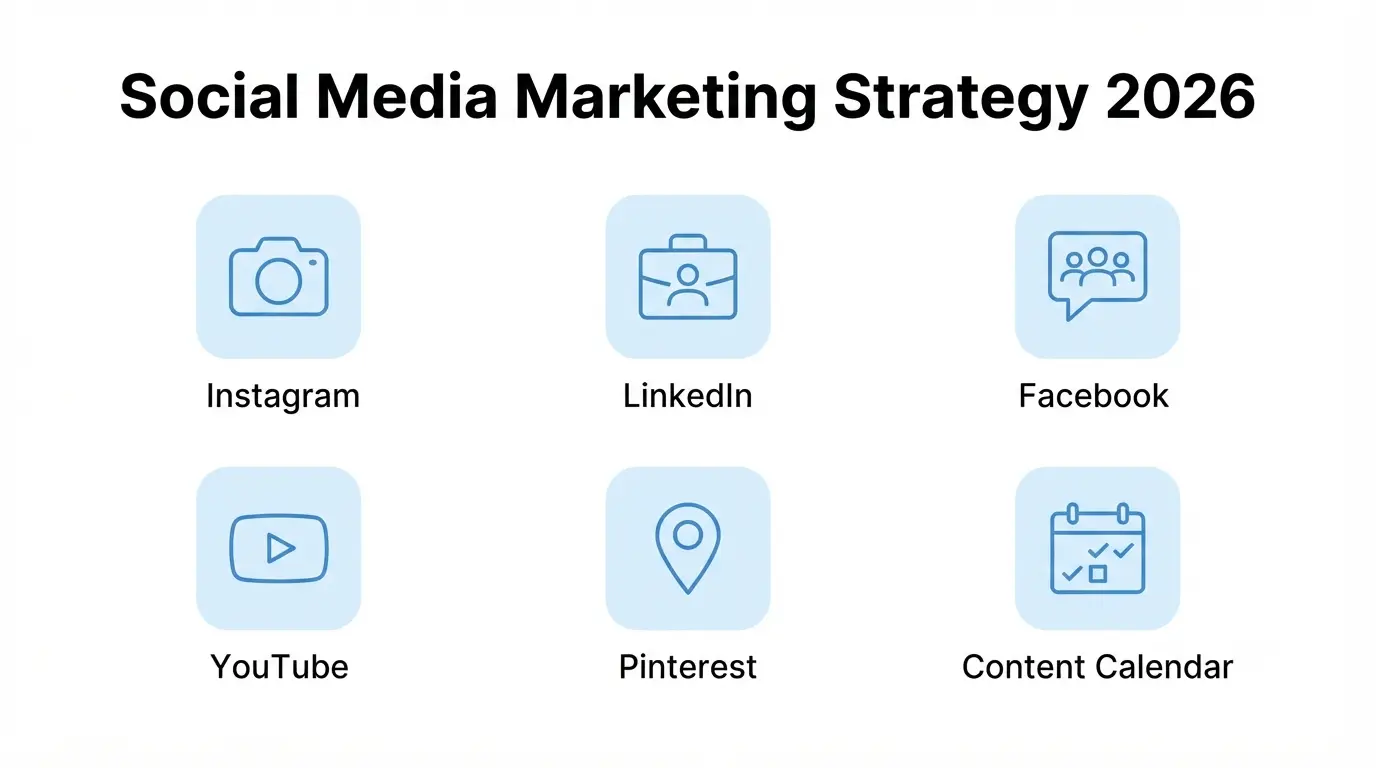
Why a One-Size-Fits-All Social Media Marketing Strategy 2026 Doesn’t Work
What performs well on Instagram often falls flat on LinkedIn, and vice versa. Audiences show up on different platforms with different expectations; someone scrolling LinkedIn wants professional insight, and someone on Instagram wants something visual and quick.
Trying to force the exact same post across every platform usually means it does okay everywhere and great nowhere. A platform-specific approach takes more planning, but it performs noticeably better.
1. Instagram: Visual Storytelling and Consistency
Instagram rewards visual consistency and genuine engagement over polished perfection. Reels currently get the most reach, but a mix of formats keeps your profile feeling complete rather than one-dimensional.
What to do: Post a mix of Reels, carousels, and Stories, focus on a consistent visual style so your feed feels cohesive, and reply to comments quickly since engagement speed affects reach. According to Instagram’s own business guidelines, consistent posting and quick engagement are among the strongest factors in organic reach.
2. LinkedIn: Professional Insight Over Promotion
LinkedIn’s audience tunes out obvious sales pitches fast, but they engage well with genuine insight, lessons learned, and behind-the-scenes business perspective.
What to do: Share real experiences, lessons, or industry observations rather than direct promotions, post consistently rather than in bursts, and engage with comments to build actual conversation.
3. Facebook: Community and Local Engagement
Facebook’s organic reach has declined significantly over the years, but it still works well for community building and local business visibility, especially through groups.
What to do: Focus on community engagement rather than broadcast-style posting, join or create relevant local groups, and use Facebook Business features like reviews and event listings if they apply to your business.
4. X (Twitter): Real-Time and Conversational
X moves fast and rewards timely, conversational content over polished, planned-out posts. It’s less about perfect content and more about showing up consistently in relevant conversations.
What to do: Post more frequently than other platforms, engage in relevant conversations and trending topics in your industry, and keep the tone conversational rather than overly formal.
5. YouTube: Long-Term, Searchable Content
Unlike most social platforms, YouTube content has real staying power; a good video can keep bringing in views and leads years after it’s published since it also functions like a search engine.
What to do: Treat video titles and descriptions with the same care as a blog post’s SEO, focus on genuinely useful, evergreen topics, and don’t ignore Shorts; they’re currently a strong discovery tool.
6. Pinterest: Discovery-Driven and Visual
Often overlooked by small businesses, Pinterest functions more like a visual search engine than a traditional social platform, and it can drive consistent traffic long after a pin is posted.
What to do: Create vertical, visually appealing pins for blog posts or products, use keyword-rich descriptions since Pinterest search works similarly to Google, and pin consistently rather than in occasional bursts.
7. Choosing Which Platforms Actually Deserve Your Time
A big part of any realistic social media marketing strategy for 2026 is knowing where not to spend your time. Trying to maintain a strong presence on every platform at once usually spreads effort too thin to do any of them well.
What to do: Pick two or three platforms where your actual audience spends time, get genuinely consistent there first, and only expand to additional platforms once those are running smoothly.
Social Media Marketing Strategy Checklist
Here’s the complete social media marketing strategy 2026 checklist, everything covered in this guide in one place:
- Tailor content format and tone to each specific platform
- Focus on two or three platforms instead of spreading thin
- Post Reels, carousels, and Stories on Instagram consistently
- Share genuine insight, not promotion, on LinkedIn
- Prioritise community engagement over broadcasting on Facebook
- Optimise YouTube titles and descriptions like blog SEO
- Use keyword-rich descriptions on Pinterest pins
Also read: Content Marketing Strategy for Small Businesses 2026.
Also read: How to Write SEO-Friendly Blog Posts
The Bottom Line
A solid social media marketing strategy for 2026 isn’t about being everywhere at once; it’s about showing up consistently on the platforms where your actual audience already spends their time, with content built for that specific space.
Pick your platforms, adapt your content to fit each one, and give it time. Social growth is rarely instant, but consistency compounds faster than most people expect.
Need help managing this across platforms? AmanTPoint helps small businesses build and run social media strategies that actually fit their audience and goals.


