
Uploading a video and hoping the YouTube algorithm figures out who it’s for isn’t a strategy, it’s luck. YouTube SEO in 2026 means treating YouTube like the search engine it actually is, the second largest in the world, and optimizing titles, descriptions, and structure the same way you’d optimize a blog post for Google.
If you’ve read our keyword research guide or our content marketing strategy guide, most of that same thinking applies here, just adapted for a video-first, search-and-recommendation platform.
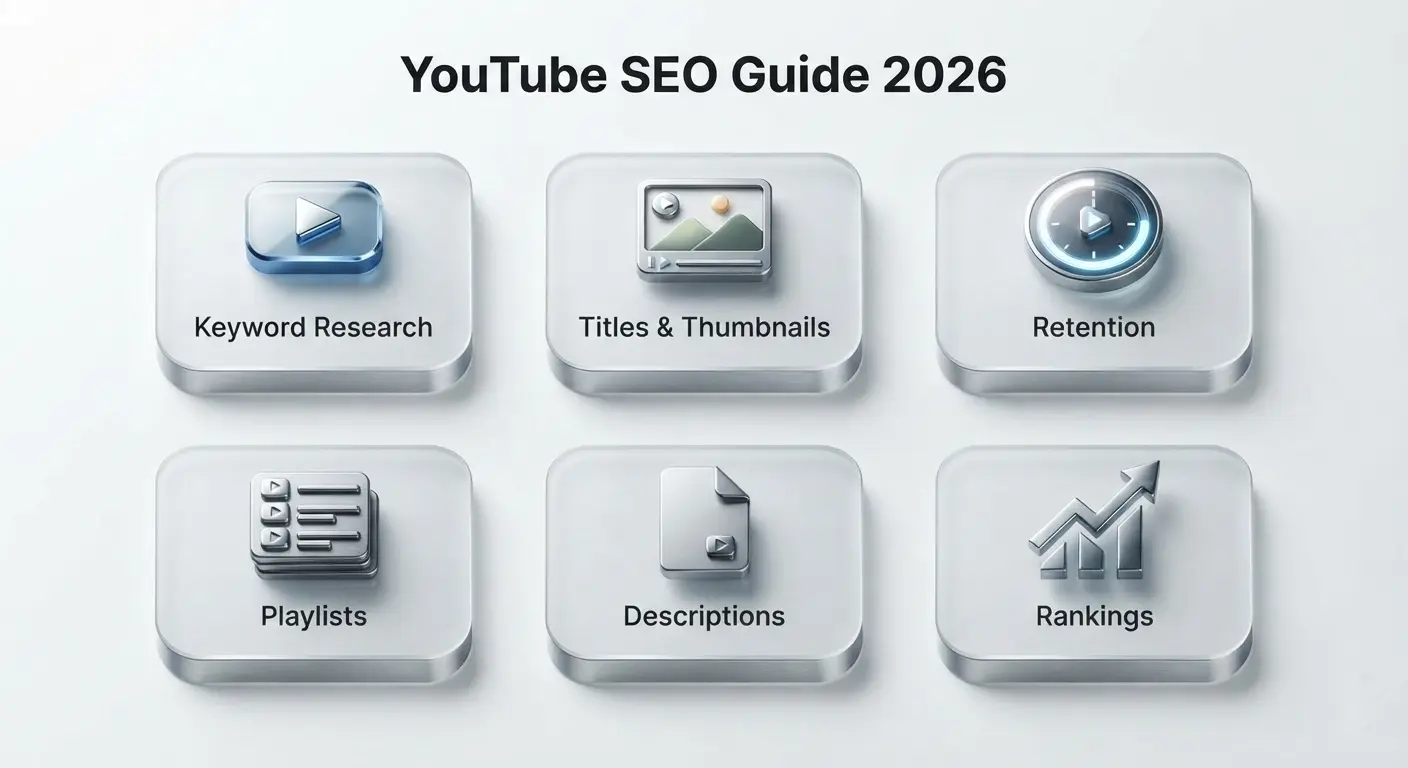
Why YouTube SEO Deserves Its Own Strategy
YouTube ranks videos partly through search relevance, similar to Google, but also through watch time and audience retention, factors a regular blog post never has to deal with.
This dual system means a video can be perfectly optimized on paper and still underperform if people click away in the first ten seconds, which is why YouTube SEO is as much about content structure as it is about keywords.
1. Keyword Research Built for YouTube, Not Google
Search intent and phrasing on YouTube often differ from Google, people type shorter, more direct queries when they’re looking for a video specifically.
What to do: Use YouTube’s own search bar autocomplete to find real phrases people search for, check what similar videos are already ranking for using their titles and tags as a guide, and prioritize keywords with visible search demand over ones that just sound relevant.
2. Titles and Thumbnails That Earn the Click
A video can rank well in search results and still get ignored if the title and thumbnail don’t convince someone to click, and click-through rate itself feeds back into how YouTube ranks the video further.
What to do: Put the primary keyword near the beginning of the title while keeping it natural and readable, design thumbnails with high contrast and minimal text that make sense even at a small size, and A/B test thumbnails using YouTube Studio’s built-in testing feature.
3. Descriptions, Tags, and Chapters Done Properly
The description box is one of the most under-used SEO tools on YouTube, most creators leave it nearly empty when it could be doing real search and navigation work.
What to do: Write a genuinely descriptive first two lines with your main keyword, since that’s what shows before “show more,” add timestamped chapters for videos over five minutes, and include relevant tags without stuffing in irrelevant, high-volume ones just to chase traffic.
4. Retention: The Metric That Overrides Everything Else
Getting the click doesn’t matter much if viewers leave within the first thirty seconds, retention is arguably the single strongest signal YouTube uses to decide whether to recommend a video further.
What to do: Deliver on the title’s promise immediately instead of a long unrelated intro, use pattern interrupts (b-roll, on-screen text, quick cuts) to hold attention, and study the audience retention graph in YouTube Studio to see exactly where people drop off.
5. Playlists and Series for Session Watch Time
YouTube also rewards channels that keep people watching across multiple videos in one session, not just performance on a single upload.
What to do: Group related videos into playlists with a logical order, use end screens to point directly to the next relevant video rather than a random one, and structure content in short series so viewers have a reason to keep watching.
6. Embedding Video to Boost Blog SEO Too
YouTube SEO and blog SEO can reinforce each other, a well-optimized video embedded on a relevant blog post increases time on page, one of the signals covered in our SEO-friendly blog writing guide.
What to do: Embed relevant videos inside matching blog posts rather than leaving them YouTube-only, add VideoObject schema markup to the blog post for potential rich results, and link back to the blog post in the video description to drive traffic both ways.
Frequently Asked Questions About YouTube SEO
How long does it take for YouTube SEO to show results?
Most channels start seeing early signals like improved click-through rate within a few weeks of fixing titles and descriptions, but meaningful ranking and recommendation growth usually takes two to three months of consistent uploads and retention data.
Do tags still matter for YouTube SEO in 2026?
Tags carry far less weight than they used to, titles, descriptions, and retention matter much more now. It’s still worth adding a handful of relevant tags, but stuffing in dozens of unrelated ones offers no real benefit.
Should I focus on Shorts or long-form video first?
Shorts are currently the fastest way to get discovered by new viewers, while long-form video builds deeper watch time and subscriber trust. Most small businesses do best using Shorts for discovery and long-form for conversion and depth.
Can I rank a YouTube video on Google search too?
Yes, YouTube videos regularly appear directly in Google search results, especially for how-to and tutorial-style queries. Using clear titles, descriptions, and embedding the video on a matching blog post with VideoObject schema improves those chances.
Video/YouTube SEO Checklist
Here’s the complete YouTube SEO checklist for 2026, everything covered in this guide in one place:
- Research keywords using YouTube’s own search bar, not just Google tools
- Put the keyword near the start of a natural, click-worthy title
- Write a genuinely useful first two lines in the description
- Add timestamped chapters on longer videos
- Deliver on the title’s promise immediately to protect retention
- Group related videos into playlists with smart end screens
- Embed key videos into matching blog posts with schema markup
Also read: How to Do Keyword Research for Free in 2026
Also read: How to Write SEO-Friendly Blog Posts
The Bottom Line
YouTube SEO for 2026 comes down to two things working together, being genuinely searchable through good keywords, titles, and descriptions, and being genuinely watchable through strong retention and pacing.
Start by fixing titles and the first two lines of your descriptions on existing videos, since that’s the fastest win, then focus on retention for anything new you upload.
Need help planning your video content? AmanTPoint helps small businesses build a YouTube SEO strategy that actually gets discovered, not just uploaded.


