
How to write SEO-friendly blog posts is one of the most useful skills any content creator or business owner can learn in 2026. You can research the best keywords and understand every ranking factor, but if your actual content isn’t structured well, it still won’t rank. If you have already read our guide on keyword research for free, you know how to find the right topics. Now it’s time to turn that research into content that both readers and Google love.
In this guide, AmanTPoint breaks down exactly how to write SEO-friendly blog posts, step by step, using the same simple structure we use for every article on this blog.
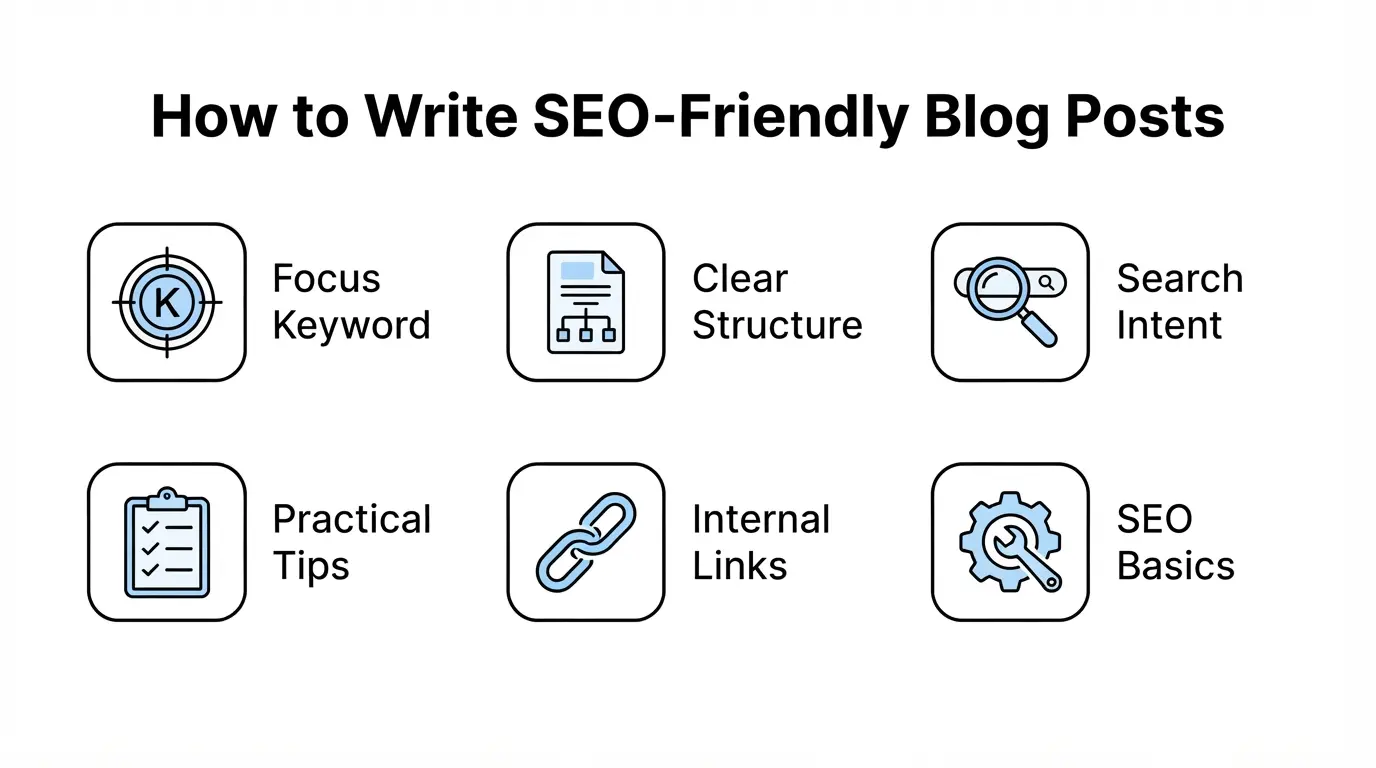
The Importance of Education How to Write SEO-Friendly Blog Posts
Even if a blog post is thoroughly researched and truly helpful, it will be difficult for readers and search engines to locate if it is disorganized. Combining the technical components is necessary to learn how to create blog entries that are optimized for search engines. Google searches for succinct, useful content.
1. Start With One Clear Focus Keyword
Every SEO-friendly blog post should be built around one main keyword that reflects exactly what your reader is searching for. Trying to target too many keywords in one post usually dilutes the content and confuses both readers and search engines.
What to do: Pick a single, specific focus keyword before you start writing, and use it naturally in your title, introduction, at least one subheading, and a few times throughout the body.
2. Understand Search Intent Before You Write
Before writing a single word, think about why someone is searching for your topic. Are they a beginner looking for basics or someone comparing two options? Matching your content to that intent is what makes it genuinely SEO-friendly.
What to do: Search your target keyword on Google and study what type of content is already ranking, whether it’s a beginner guide, a comparison, or a list, and shape your post to match that format.
3. Build a Clear Structure Before Writing
Jumping straight into writing without a plan often leads to disorganised, hard-to-follow content. A clear structure helps both readers and search engines understand how your content is organised.
What to do: Outline your post first with an introduction, several H2 sections that break the topic into smaller parts, a checklist or summary near the end, and a short conclusion.
4. Write in Simple, Clear Language
Readers, especially beginners, lose interest quickly when content is filled with jargon or overly long sentences. Simple language keeps people reading longer, which is a positive signal for search engines too.
What to do: Use short sentences, explain technical terms with simple examples, and break long paragraphs into two or three sentences at most.
5. Write Descriptive, Keyword-Rich Headings
Headings do double duty; they help readers scan your content quickly, and they help search engines understand the structure and topics covered on the page.
What to do: Make each H2 heading a complete, descriptive phrase rather than a vague label, and include your focus keyword or a close variation in at least one or two headings.
6. Give Practical, Actionable Advice
Content that only explains concepts without telling readers what to actually do tends to underperform. Practical, step-by-step advice keeps readers engaged and builds trust.
What to do: After explaining each point, add a short “What to do” tip that tells the reader exactly how to apply what they just learnt.
7. Add a Relevant Image Early in the Post
Visual content helps readers understand your topic faster and keeps them on the page longer, which both improve user experience and, indirectly, SEO performance.
What to do: Add a relevant featured image near the top of your post, and always include descriptive alt text that naturally includes your focus keyword.
8. Link to Related Content, Both Internal and External
Internal links help search engines discover your other content and keep readers exploring your site longer. External links to trusted sources add credibility to your own content.
What to do: Link to one or two related articles on your own site, and reference at least one authoritative external source, such as Google’s own SEO Starter Guide, when relevant.
9. End With a Checklist or Summary
A short checklist near the end of your post gives readers, especially students and beginners, a quick way to review everything they just learned without rereading the whole article.
What to do: Summarise your main points into five to eight short bullet points that readers can quickly scan or save for later.
10. Set the Basic SEO Fields Before Publishing
Even the best-written post won’t perform well if the basic SEO fields are left empty or poorly optimised. These small details make a big difference in how your content is found.
What to do: Before publishing, set your focus keyword, write an SEO title with the keyword near the beginning, add a clear meta description, and keep your URL short and keyword-relevant.
SEO-Friendly Blog Writing Checklist
- Choose one clear focus keyword before writing
- Match your content to the searcher’s intent
- Outline your post with clear H2 sections before writing
- Use simple language and short sentences
- Write descriptive, keyword-rich headings
- Add a practical “What to do” tip after each point
- Include a relevant image with keyword-rich alt text
- Add both internal and external links
- End with a short checklist or summary
- Set your SEO title, meta description, and URL before publishing
Once your post is written, you can strengthen it further using the techniques from our on-page vs off-page SEO guide and check your keyword usage with our top 20 genuinely free SEO tools.
The Key Takeaway
Learning how to write SEO-friendly blog posts isn’t about tricking search engines; it’s about organising genuinely helpful content in a way that both readers and Google can easily understand. Simple language, clear structure, and practical advice will always outperform complicated writing packed with keywords.
Start with one clear focus keyword, follow a simple structure, and always end with something practical your reader can act on. Consistency in following this process will do more for your blog’s performance than any single trick ever could.
Need help building out a full content strategy? The AmanTPoint team helps businesses write and optimise blog content that actually ranks and converts.


