
Keyword research for free is completely possible in 2026, and it is the starting point of every successful SEO strategy. You don’t need an expensive tool subscription to do it well. If you have already read our guide on on-page vs off-page SEO, you know that content quality and search intent matter more than anything else. But before you can write content that matches search intent, you need to know exactly what your audience is searching for. That is what keyword research does.
In this guide, AmanTPoint walks you through how to do keyword research for free in 2026, using tools that cost nothing but still deliver reliable data.
What Is Keyword Research for Free and Why It Matters
Finding the precise words and phrases that consumers enter into Google when searching for goods, services, or information about your company is known as keyword research. If you skip this stage, you are effectively speculating about what your audience wants, which typically results in material that no one looks for.
Why it matters: The right keywords help you create content that actually gets found, attract visitors who are ready to take action, and avoid wasting time writing about topics with little or no search demand.
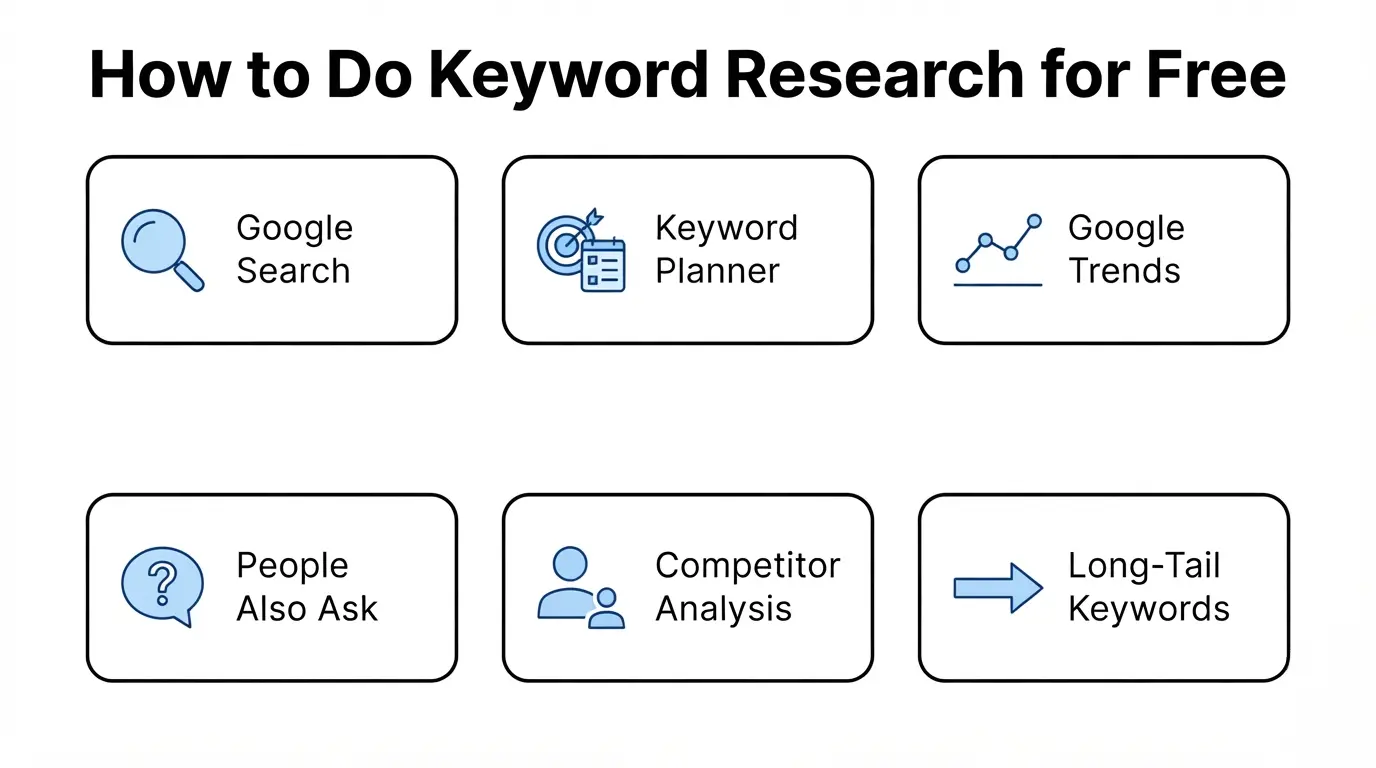
1. Start With Google Search Itself
Before opening any tool, Google’s own search results already give you free keyword ideas. Type a broad term related to your business and pay attention to what Google suggests.
What to do: Look at the autocomplete suggestions as you type, scroll down to “People also ask” and “Related searches” at the bottom of the results page, and note any phrases that match what your business offers.
2. Google Keyword Planner (Free with a Google Ads Account)
Google Keyword Planner remains one of the most reliable free sources for search volume data, even if you never plan to run paid ads.
What to do: Create a free Google Ads account, open Google Keyword Planner, and use “Discover new keywords” to enter a seed keyword. You will get monthly search volume ranges, competition level, and related keyword suggestions you can export for free.
3. Google Trends
Search volume alone doesn’t tell you if a topic is growing or declining. Google Trends fills that gap by showing interest over time.
What to do: Open Google Trends and compare two or three keyword variations to see which one is trending upward, and use the “related queries” section to discover rising search terms in your niche before your competitors do.
4. AnswerThePublic and People Also Ask
A large share of searches are questions. Understanding what questions your audience is asking helps you create content that directly answers their needs.
What to do: Enter your seed keyword into a free question-based keyword tool, and separately click through several “People also ask” boxes on Google to see how questions expand into related sub-questions.
5. Competitor Analysis (Manual, No Tool Needed)
Many times, your rivals have already conducted keyword research on your behalf. You may find opportunities you haven’t thought about by looking at what they rank for.
What to do: Search your main keywords and note which competitor pages consistently appear on page one, then read their headings and subheadings to identify the specific angles and subtopics they are targeting.
6. Long-Tail Keywords Over Short, Competitive Ones
Short keywords like “SEO” are extremely competitive and rarely realistic for newer or smaller websites to rank for. Long-tail keywords are longer, more specific phrases that carry less competition and higher intent.
What to do: Instead of targeting “SEO tools,” target something more specific like “free SEO tools for small business websites.” These phrases are easier to rank for and usually convert better because the searcher’s intent is clearer.
7. Check Search Intent Before Finalising Any Keyword
Finding a keyword with good search volume isn’t enough. You need to understand why people are searching it, whether they want information, are comparing options, or are ready to buy.
What to do: Search your target keyword and study the type of content currently ranking. If the top results are blog guides, write a guide. If they are product pages, a blog post likely won’t rank as well.
Free Keyword Research Tools Checklist for 2026
- Use Google Search autocomplete and related searches for quick ideas
- Set up a free Google Keyword Planner account for search volume data
- Check Google Trends to spot rising and declining topics
- Explore “People also ask” boxes for question-based content ideas
- Study top-ranking competitor pages for keyword and structure ideas
- Prioritise long-tail keywords over short, highly competitive terms
- Match every keyword to a clear search intent before writing content
- Track your rankings over time and refine your keyword list regularly
Once you have your keyword list ready, you can put it to work using the techniques from our on-page vs off-page SEO guide, and audit your site further using our top 20 genuinely free SEO tools.
The Key Takeaway
You don’t need a paid subscription to do effective keyword research for free in 2026. Google’s own free tools, combined with a bit of competitor analysis and attention to search intent, can give you everything you need to build a strong content strategy.
Start small, focus on long-tail keywords that match real search intent, and build from there. Consistency in researching and targeting the right keywords will do more for your rankings than any single tool ever could.
Need help turning your keyword research into a full content strategy? The AmanTPoint team helps businesses find the right keywords and build SEO content that actually ranks.


