
If you run a local business, chances are most of your customers aren’t finding you through some broad national search. They’re typing things like “plumber near me” or “best bakery in Chandigarh” and expecting Google to hand them a shortlist within seconds. A local SEO guide for small businesses exists for exactly this reason, because ranking locally works differently from ranking nationally, and most small business owners never get shown how it actually works.
We touched on local citations briefly in our on-page vs off-page SEO guide, but local SEO deserves its own space. It’s often the fastest way for a small business to start showing up in front of people who are ready to buy, right now, in their neighbourhood.
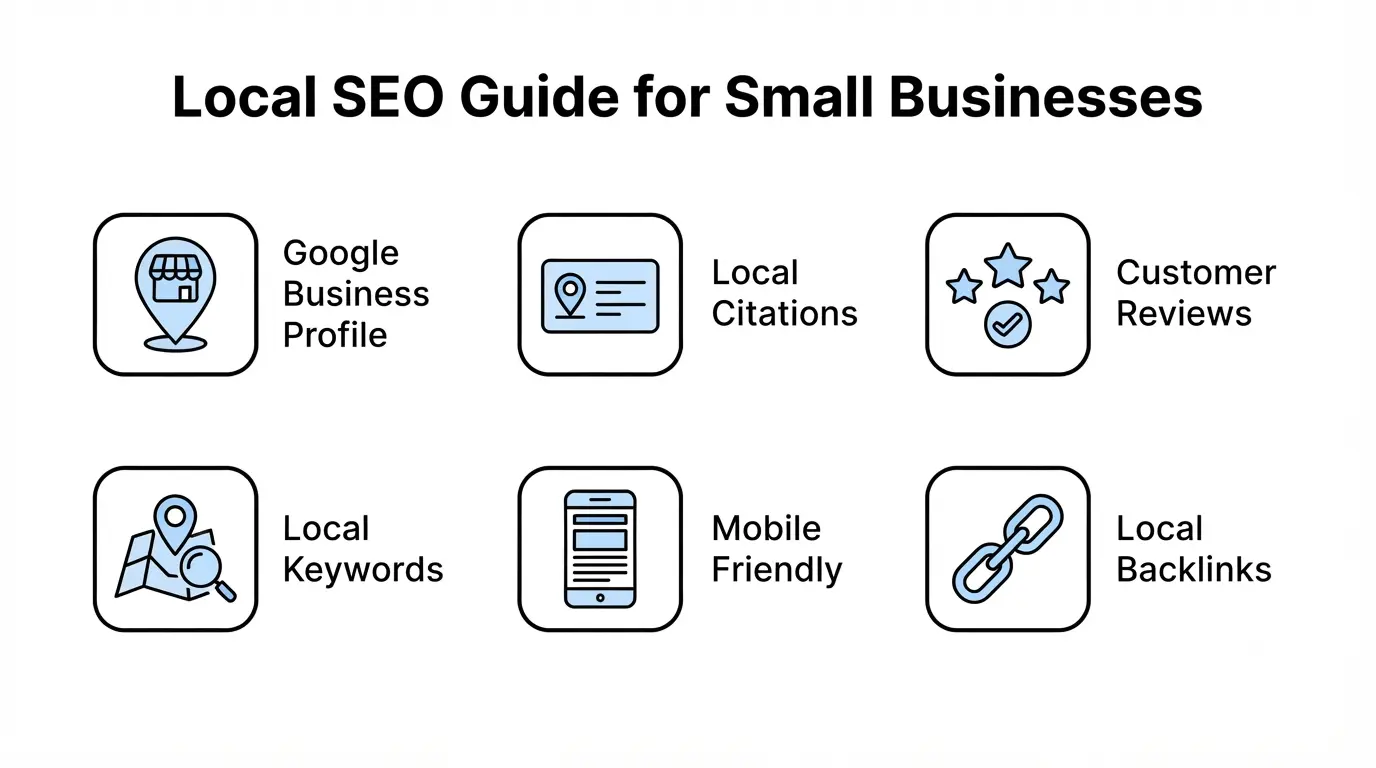
Why This Local SEO Guide for Small Businesses Matters
Most small businesses aren’t competing with companies across the country, they’re competing with the five other shops on the same street or in the same part of town. That’s a much smaller battlefield, and it’s one where a bit of local SEO effort goes a long way compared to trying to rank for broad, national keywords.
When someone searches for a service “near me,” Google leans heavily on things like your Google Business Profile, your reviews, and how consistent your business information is across the web. Get those right, and you’re often competing with far fewer businesses than you’d expect.
1. Claim and Fully Complete Your Google Business Profile
This is the single most important thing on this entire list. Your Google Business Profile is what shows up in Maps, in the local pack at the top of search results, and often before your actual website even gets a look.
What to do: Claim your profile if you haven’t already, fill out every section including hours, category, and services, add real photos of your business, and keep everything updated whenever something changes.
2. Keep Your Business Information Consistent Everywhere
Search engines cross-check your business name, address, and phone number across different directories to judge how trustworthy and legitimate your business is. If your address is written three different ways across the web, that inconsistency actually works against you.
What to do: Pick one exact format for your business name, address, and phone number, then make sure it matches word for word across your website, Google Business Profile, and every directory you’re listed on.
3. Get Listed on Relevant Local Directories
Beyond Google, there are dozens of directories, some general, some industry-specific, that local customers actually browse. Being listed on these gives you more visibility and more of those consistency signals we just talked about.
What to do: Start with the major general directories relevant to your country, then look for two or three industry-specific ones where your competitors are already listed.
4. Actually Ask for Reviews, Don’t Just Wait for Them
Reviews influence both rankings and whether someone actually clicks on your listing over a competitor’s. Most happy customers simply won’t think to leave one unless you ask, so waiting passively means you’re leaving reviews on the table.
What to do: After a good interaction or completed job, ask directly for a review, send a follow-up link by text or email, and always reply to the reviews you get, good or bad.
5. Create Location-Specific Content
If you serve more than one area, a single generic homepage isn’t going to rank well for each individual location. Location-specific pages give search engines a clear signal that you actually serve that particular area.
What to do: Create a separate page for each city or neighbourhood you serve, and write genuinely useful content for that area rather than just swapping out the city name on a template.
6. Use Local Keywords Naturally in Your Content
People searching locally often include a city, neighbourhood, or landmark in their query. If your content never mentions where you actually operate, you’re missing an easy signal that could help you show up for those exact searches.
What to do: Naturally work your city or service area into your homepage, service pages, and titles, without forcing it in unnaturally or repeating it excessively.
7. Build Local Backlinks
A link from a local newspaper, a neighbourhood blog, or a community organisation carries real weight for local rankings, often more than a generic link from an unrelated national site.
What to do: Sponsor a local event, get featured in a local news story, or partner with nearby businesses for a joint promotion that naturally earns you a mention and a link.
8. Make Sure Your Website Works Well on Mobile
Most local searches happen on a phone, often from someone standing outside deciding where to go next. A slow or broken mobile experience can lose you a customer who was seconds away from walking through your door.
What to do: Test your site on your own phone regularly, make sure your phone number and address are easy to tap and find, and fix anything that loads slowly or looks broken on smaller screens.
Local SEO Checklist for Small Businesses
Here’s the complete local SEO checklist for small businesses we’ve walked through in this guide, all in one place:
- Claim and fully complete your Google Business Profile
- Keep your business name, address, and phone number identical everywhere
- Get listed on relevant general and industry-specific directories
- Actively ask happy customers for reviews
- Reply to every review you receive
- Create dedicated pages for each area you serve
- Mention your city or service area naturally in your content
- Earn backlinks from local news, blogs, and community sites
- Make sure your website works well on mobile devices
If you haven’t already, it’s worth pairing this with our free keyword research guide to find the exact local terms your customers are searching for, and our list of free SEO tools to track how your local rankings improve over time.
The Bottom Line
Local SEO isn’t complicated, but it does require consistency. A complete Google Business Profile, matching business details everywhere, a steady stream of reviews, and content that actually mentions where you operate will put you ahead of most local competitors who never bother with any of this.
Start with your Google Business Profile this week if you haven’t already, then work through the rest of this checklist over the next month. Small, consistent effort here tends to pay off faster than almost any other SEO work you can do.
Need help setting this up properly? AmanTPoint works with small businesses to build out their local SEO from the ground up, so customers nearby can actually find them. This local SEO guide for small businesses should give you a solid starting point, but if you’d rather have it handled for you, we’re here to help.


