
SEO gets a lot of attention, and rightly so, but it’s really just one piece of a bigger picture. Without an actual strategy behind what you’re publishing, even perfectly optimized posts can feel scattered and directionless. A solid content marketing strategy for small businesses is what ties everything together, what you write, when you publish it, and where it goes after it’s live.
If you’ve read our guide on writing SEO-friendly blog posts, you already know how to put together a single post that works. This is about zooming out, planning what to create, in what order, and why.
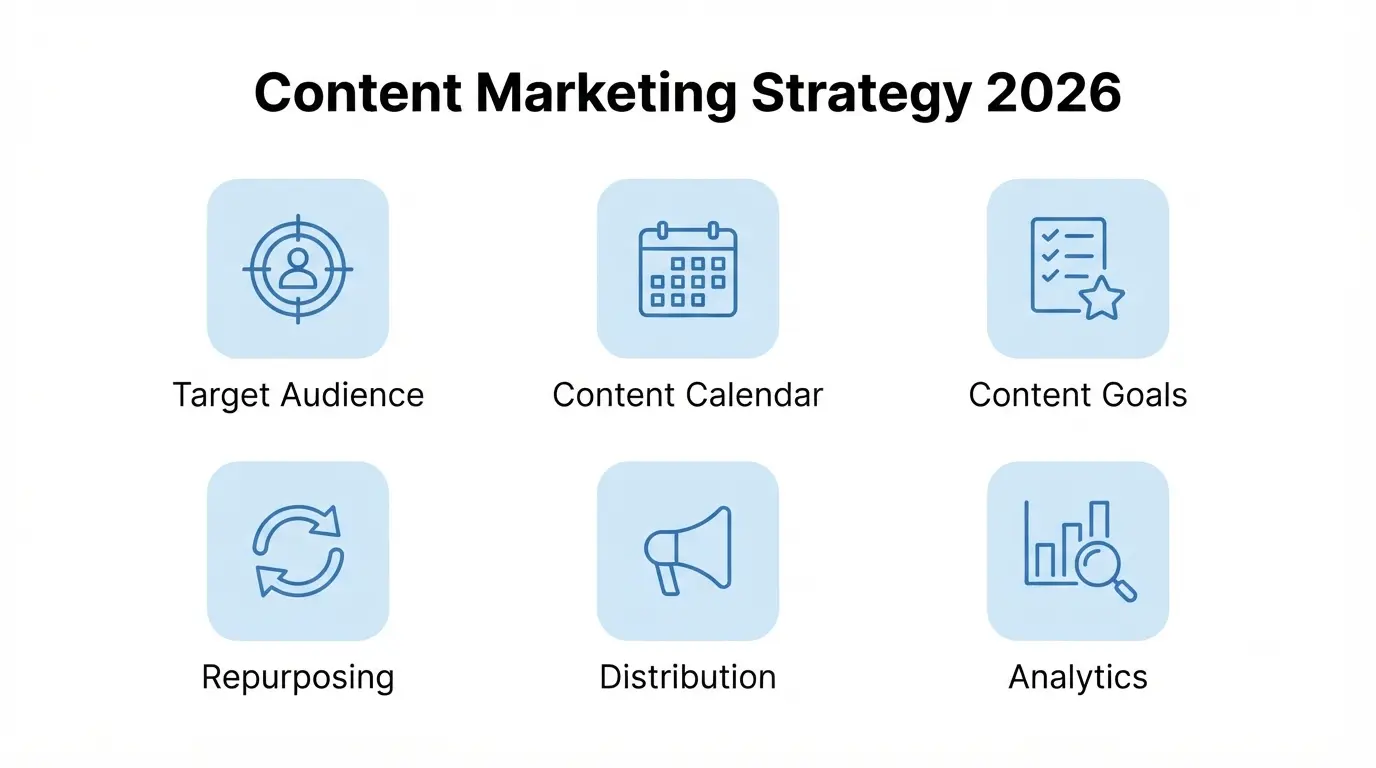
Why Small Businesses Need an Actual Strategy, Not Just Posts
Publishing content randomly, whenever inspiration strikes, tends to produce inconsistent results. One month you post five times, the next month nothing, and your audience never quite knows what to expect from you.
A real content marketing strategy for small businesses fixes this by giving you a repeatable system, one that doesn’t rely on motivation showing up on the right day.
1. Define Who You’re Actually Writing For
Content that tries to speak to everyone usually connects with no one. Before planning any topics, you need a clear picture of the specific person you’re writing for.
What to do: Write down your ideal customer’s biggest questions, frustrations, and goals related to your business, and let that shape every piece of content you plan going forward.
2. Set Goals That Actually Mean Something
“Post more content” isn’t a goal, it’s an activity. Without a real target, it’s impossible to tell whether your strategy is actually working or just keeping you busy.
What to do: Pick one or two specific goals, like generating a certain number of leads per month or ranking for a set of target keywords, and check your progress against them regularly.
3. Build a Simple Content Calendar
A content calendar doesn’t need to be complicated; it just needs to exist. Without one, content planning becomes a last-minute scramble every single time.
What to do: Plan topics at least a month in advance using a simple spreadsheet or free tool, and block out consistent publishing days rather than posting whenever you find time.
4. Mix Up Your Content Types
Relying entirely on blog posts limits how far your content can travel and who it can reach. Different formats work better on different platforms and for different audiences.
What to do: Plan a mix of formats, including blog posts, short videos, infographics, and email newsletters, based on where your audience actually spends time rather than what’s easiest for you to produce.
5. Repurpose Content Instead of Starting From Scratch Every Time
Creating everything from zero is exhausting and unnecessary. One solid piece of content can usually be reshaped into several smaller ones without much extra effort.
What to do: Turn a single blog post into a few social media captions, a short video script, or an email newsletter, stretching the value of the work you’ve already put in.
6. Actually Distribute Your Content, Don’t Just Publish It
Hitting publish isn’t the finish line; it’s closer to the starting point. Content that just sits on your website without being shared anywhere rarely reaches the people who need it.
What to do: Share new content across your email list and social channels, and consider reaching out to a few relevant sites or communities where your audience already spends time.
7. Track What’s Actually Working
Without tracking results, you end up repeating whatever you did last time, good or bad, simply out of habit rather than evidence.
What to do: Check performance in Google Analytics every month, note which posts are driving traffic or leads, and create more content around those winning topics.
Content Marketing Strategy Checklist
- Define exactly who you’re creating content for
- Set one or two clear, measurable goals
- Build a simple content calendar at least a month ahead
- Mix formats instead of relying on one content type
- Repurpose existing content into new formats
- Actively distribute content instead of just publishing it
- Track performance monthly and double down on what works
Also read: How to Write SEO-Friendly Blog Posts
Also read: How to Do Keyword Research for Free in 2026
The Bottom Line
A content marketing strategy for small businesses doesn’t need a big team or a huge budget to work, it needs consistency and a clear sense of who you’re creating for. Random posting rarely builds momentum, a plan does.
Start small, pick one goal, build a basic calendar, and track what happens. You can always add complexity later once the fundamentals are actually working.
Need help building this out? AmanTPoint works with small businesses to plan and execute content strategies that go beyond just publishing for the sake of it.


