
Sending one newsletter a month and hoping people buy something isn’t an email marketing strategy 2026, it’s a habit. Email is still one of the highest-ROI channels available to small businesses, but only when it’s built around lists, sequences, and segments, not random blasts.
If you’ve read our content marketing strategy guide and our social media marketing strategy guide, you already know that creating content is only half the job, getting it in front of the right person at the right time is the other half. Email does that better than almost any other channel, because you own the list; no algorithm decides who sees it.
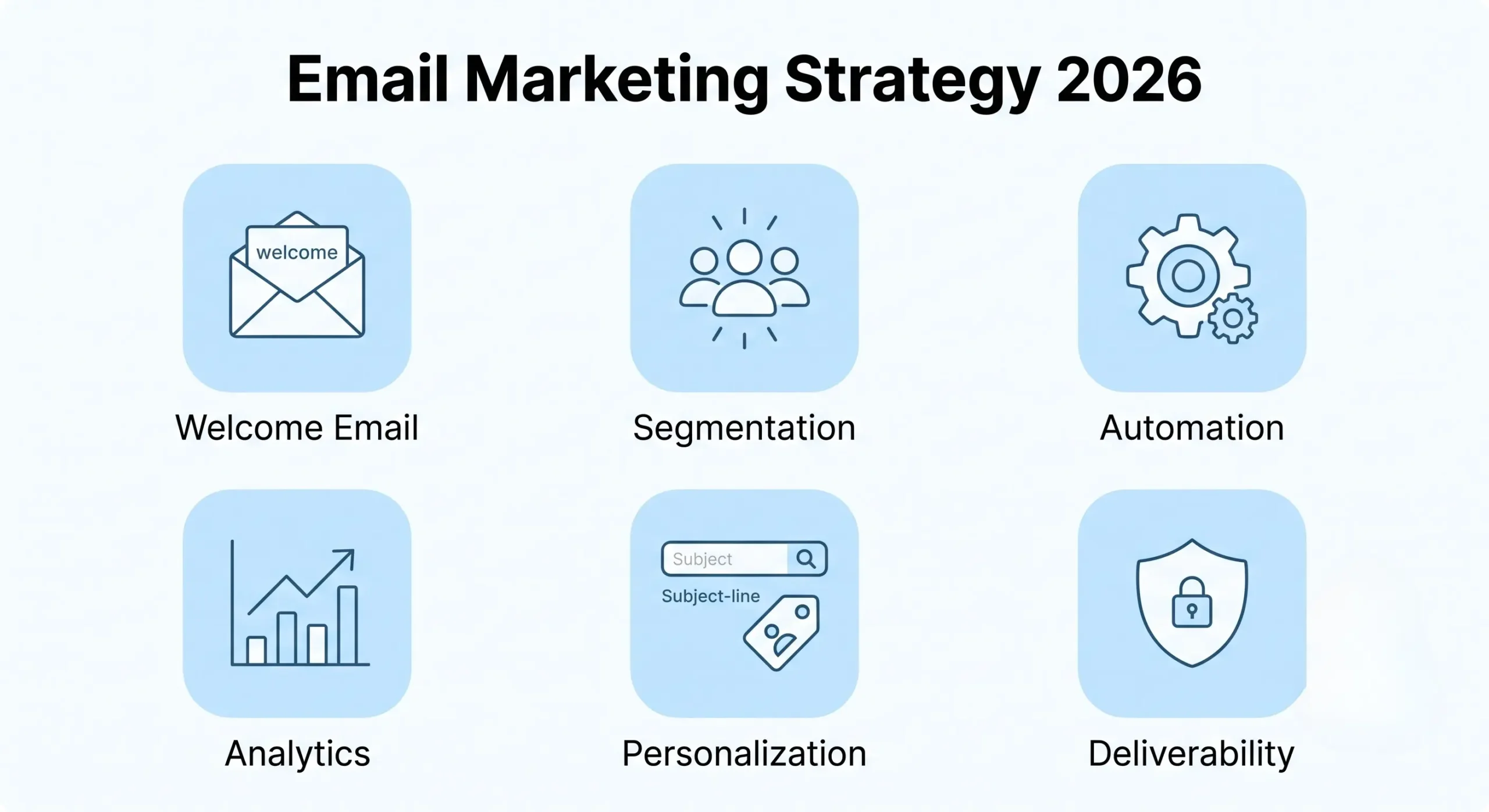
Why Email Marketing Still Works in 2026
Social platforms change their algorithms constantly, and reach on organic posts keeps shrinking. Email doesn’t have that problem. If someone subscribes, every message lands directly in their inbox, no gatekeeper deciding whether they see it.
For small businesses specifically, this matters even more, because a well-planned email marketing strategy 2026 lets you nurture a lead over weeks or months without paying for ads every time you want to reach them again.
1. Building a Permission-Based Email List
A bought list will always underperform a small list of people who actually asked to hear from you. Permission-based growth takes longer, but every subscriber on it is someone who’s already shown interest.
What to do: Offer a genuinely useful lead magnet (checklist, discount, free guide) in exchange for an email, add signup forms at natural points on your site like blog posts and checkout, and never add contacts from business cards or bought lists without explicit opt-in.
2. Welcome Sequences That Set the Tone
The welcome sequence is the highest-engagement email a new subscriber will ever get from you. Open rates are usually far higher here than on regular campaigns, so it’s worth setting up properly instead of sending one generic email.
What to do: Send a short 3 to 5 email sequence that introduces your business, delivers the promised lead magnet, shares your best content or a customer story, and ends with a clear, low-pressure next step. A strong email marketing strategy 2026 should make this welcome journey one of its first automated workflows.
3. Segmentation: Sending the Right Message to the Right Person
A new subscriber and a repeat customer don’t need the same email. An effective email marketing strategy 2026 uses segmentation to separate your audience and deliver more relevant messages instead of treating your mailing list as one group.
What to do: Split your list by behavior (new subscriber, past buyer, inactive) rather than just demographics, tag people based on what they clicked or bought, and tailor at least your subject line and opening line to each segment.
4. Behavioral Automation (Abandoned Cart, Re-engagement, Post-Purchase)
Automation is a core part of any email marketing strategy 2026, because these flows run in the background and catch important moments that a manual campaign schedule would miss entirely.
What to do: Set up an abandoned cart sequence for e-commerce, a re-engagement flow for subscribers who haven’t opened in 60-plus days, and a simple post-purchase sequence asking for feedback or a review.
5. Subject Lines and Deliverability
An email that lands in spam or never gets opened doesn’t matter how good the content inside is. Deliverability and subject lines decide whether the rest of your work even gets seen.
What to do: Keep subject lines specific and honest rather than clickbait-y, verify your domain with SPF, DKIM, and DMARC records, and clean your list periodically by removing subscribers who never engage. According to Mailgun’s deliverability guidelines, proper domain authentication is one of the strongest factors in avoiding the spam folder.
6. Personalization Beyond First Names
Dropping someone’s first name into a subject line isn’t real personalization anymore. Most readers have seen that trick a hundred times. Real personalization is about relevance, not a merge tag.
What to do: Reference what someone actually browsed or bought, send location or industry-specific content when relevant, and adjust send frequency based on how engaged a subscriber actually is. These tactics make your email marketing strategy 2026 more relevant without relying on basic first-name personalization.
7. Measuring What Actually Matters
Open rate alone doesn’t tell you if email marketing is working for your business. It’s easy to chase a vanity number while revenue from email stays flat.
What to do: Track click-through rate and conversion rate alongside open rate, watch unsubscribe rate as a signal of list fatigue, and tie at least one campaign a month back to actual revenue or leads generated. Measuring these metrics helps you improve your email marketing strategy 2026 over time.
8. Choosing the Right Email Marketing Tool for a Small Business
Most small businesses don’t need an enterprise platform on day one. Picking a tool that matches your current list size and technical comfort matters more than picking the one with the most features.
What to do: Start with a beginner-friendly platform that has free-tier automation, make sure it integrates with your website or store, and only upgrade to advanced tools once you’re actually using segmentation and automation, not just single sends.
Email Marketing Strategy Checklist
Here’s the complete email marketing strategy 2026 checklist, with everything covered in this guide in one place:
- Build your list through opt-in only, never bought lists
- Set up a 3 to 5 email welcome sequence
- Segment by behavior, not just demographics
- Automate abandoned cart, re-engagement, and post-purchase flows
- Authenticate your domain with SPF, DKIM, and DMARC to protect deliverability
- Personalize based on real behavior, not just first names
- Track click-through and conversion rate, not just opens
- Pick a tool that fits your current list size, not your future one
Also read: Content Marketing Strategy for Small Businesses 2026
Also read: Social Media Marketing Strategy 2026
The Bottom Line
A real email marketing strategy 2026 isn’t about sending more emails. It’s about sending the right email to the right segment at the right moment, backed by a clean list and a few automated flows doing the work in the background.
Start with permission-based list building and a solid welcome sequence, then layer in segmentation and automation as your list grows. Consistency and relevance beat volume every time.
Need help setting this up? AmanTPoint helps small businesses build email marketing systems that actually convert, not just newsletters that sit unopened.


