
Boosting a post and calling it “running ads” is how most small businesses waste their Facebook and Instagram budget. A real Meta ads strategy 2026 means setting up proper campaigns, targeting, and creative inside Meta Ads Manager, not just clicking the blue “Boost” button and hoping.
If you’ve read our Google Ads for Beginners guide, think of this as the other half of your paid marketing setup. Google Ads catches people actively searching; Meta ads (Facebook and Instagram) put you in front of people who aren’t searching yet but match your ideal customer profile.
Why Meta Ads Still Matter for Small Businesses in 2026
Organic reach on Facebook has been low for years, and Instagram keeps favoring Reels over regular posts. Paid reach fixes that gap instantly, letting you decide exactly who sees your business instead of hoping the algorithm picks you.
Meta’s targeting also remains some of the most detailed available, covering interests, behaviors, and lookalike audiences built from your own customer data, which makes it a strong complement to search-based ads like Google.
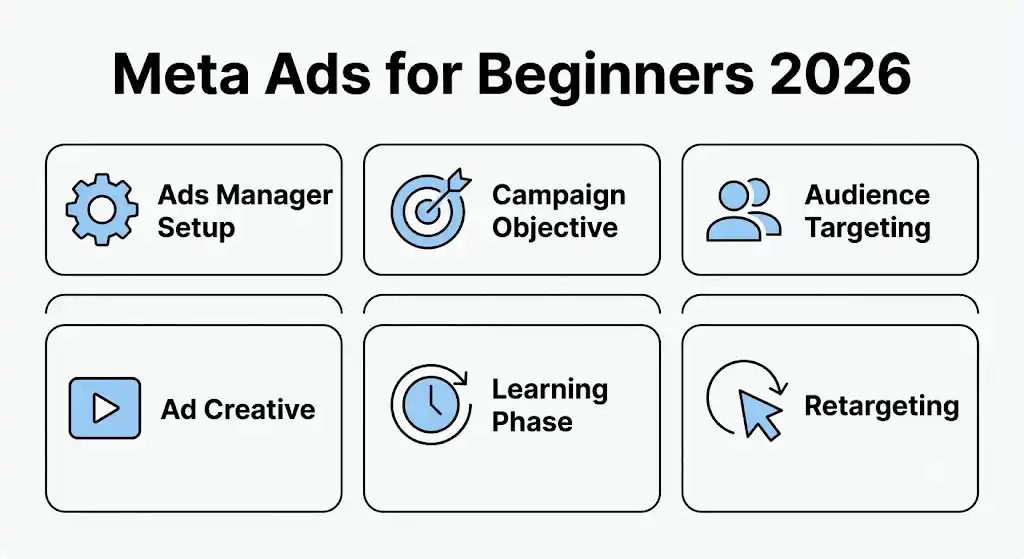
1. Setting Up Ads Manager the Right Way
Skipping proper setup and boosting posts directly from the app limits you to basic targeting and objectives. Ads Manager unlocks the full toolkit, and it’s free to use.
What to do: Create a Meta Business Suite account, connect your Facebook Page and Instagram profile, install the Meta Pixel on your website, and set up Conversions API for more reliable tracking as browser restrictions increase.
2. Choosing the Right Campaign Objective
Meta optimizes delivery based on the objective you pick, so choosing the wrong one means the algorithm is literally trying to get you the wrong outcome.
What to do: Use Awareness for brand visibility with a new audience, Traffic or Engagement when you want website visits or interaction, and Sales or Leads once you have the Pixel tracking conversions properly, since those objectives need conversion data to optimize well.
3. Audience Targeting: Cold, Warm, and Lookalike
Running every ad to a broad cold audience burns budget fast. A layered targeting approach, cold audiences for awareness, warm audiences (website visitors, page engagers) for consideration, gets noticeably better results.
What to do: Build a custom audience from your website visitors and email list, create a lookalike audience once you have at least 100 past customers, and keep a small interest-based cold audience separate for testing new customer segments.
4. Creative That Doesn’t Look Like an Ad
Feed and Reels ads perform better when they blend into the content people are already scrolling through, rather than looking like a polished commercial.
What to do: Shoot vertical video for Reels and Stories placements, lead with the hook in the first two seconds, use real customers or founders on camera instead of stock footage, and test at least three creative variations per campaign.
5. Budgeting and Bidding Without Overspending
Meta’s algorithm needs a learning phase to optimize delivery, and constantly editing a campaign mid-flight resets that progress, which is one of the most common budget-wasting mistakes small businesses make.
What to do: Start with a daily budget you’re comfortable losing during the learning phase (roughly 50 conversions before judging performance), avoid editing the campaign daily, and use Campaign Budget Optimization to let Meta shift spend toward the best-performing ad set. According to Meta’s own advertising guidelines, the learning phase is a key factor in how efficiently a campaign eventually delivers results.
6. Retargeting Website Visitors and Cart Abandoners
Most visitors don’t convert on the first visit. Retargeting is usually the cheapest, highest-converting campaign type because you’re reaching people already familiar with your business.
What to do: Set up a retargeting campaign for anyone who visited your site in the last 30 days, run a separate flow for cart abandoners with a stronger offer, and exclude people who already converted to avoid wasting spend.
7. Reading the Metrics That Actually Matter
A low cost-per-click can still mean a bad campaign if none of those clicks turn into leads or sales. Ads Manager shows a lot of numbers, but only a few decide whether a campaign is actually working.
What to do: Track cost per result (lead or purchase) over click-through rate, watch frequency to catch ad fatigue before performance drops, and compare return on ad spend against your actual profit margin, not just revenue.
Meta Ads Strategy Checklist
Here’s the complete Meta ads strategy 2026 checklist, everything covered in this guide in one place:
- Set up Ads Manager, Pixel, and Conversions API properly
- Match campaign objective to your actual goal
- Layer cold, warm, and lookalike audiences separately
- Use native-feeling vertical creative for Reels and Stories
- Give campaigns time to exit the learning phase before judging
- Run a dedicated retargeting campaign for site visitors
- Track cost per result and ROAS, not just CTR
Also read: Google Ads for Beginners 2026
Also read: Social Media Marketing Strategy 2026
The Bottom Line
A real Meta ads strategy for 2026 isn’t about boosting posts and hoping, it’s about proper campaign setup, layered audiences, native-feeling creative, and giving the algorithm enough time and data to actually optimize.
Start with the Pixel and one retargeting campaign, that alone usually outperforms boosted posts. Then layer in cold audience testing and lookalikes as you collect more customer data.
Need help running this? AmanTPoint helps small businesses set up and manage Meta ad campaigns that are built for actual leads and sales, not just impressions.


