
Conversion rate optimization is what turns the traffic you already have into leads and customers, instead of just watching visitors leave without buying. Driving more traffic to a website that doesn’t convert is like pouring water into a leaking bucket, so a real conversion rate optimization strategy for 2026 fixes the leaks first, before you spend another rupee getting more visitors.
If you’ve read our Google Ads guide, our Meta Ads guide, or our SEO series, you already know how to get traffic. This guide is about what happens after someone lands on your page.
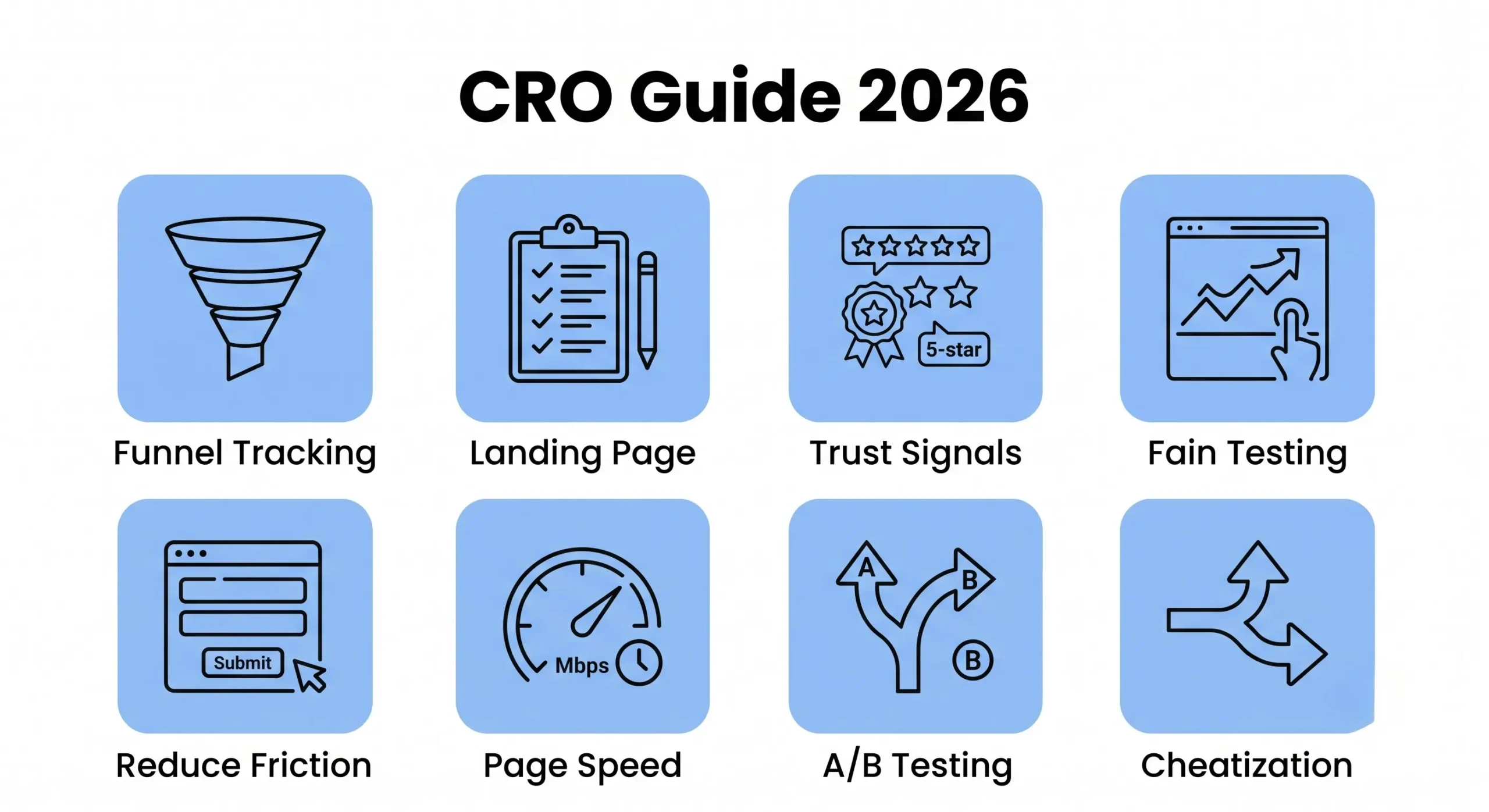
Why Conversion Rate Optimization Matters More Than More Traffic
Doubling your traffic doubles your ad spend and your workload. Doubling your conversion rate doesn’t cost anything extra, it just means the same traffic works twice as hard. That’s why conversion rate optimization is often the highest-ROI marketing activity a small business can invest in.
Most small business websites convert well below their potential simply because nobody ever tested the page, they just built it once and left it alone.
1. Finding Where Visitors Actually Drop Off
You can’t fix a leak you haven’t found. Before changing anything, you need to know exactly where people lose interest or get stuck.
What to do: Set up funnel tracking in Google Analytics 4 to see drop-off between key steps, watch session recordings with a tool like Microsoft Clarity or Hotjar, and check mobile versus desktop conversion rates separately since they often behave very differently.
2. Landing Page Clarity Over Cleverness
A confused visitor doesn’t convert, no matter how clever or stylish the copy is. Clarity about what you offer and what to do next beats a witty headline almost every time.
What to do: Make the headline state the offer plainly within the first five seconds, keep one primary call-to-action per page instead of competing buttons, and cut any content that doesn’t directly support the decision to buy or inquire.
3. Trust Signals That Actually Reduce Hesitation
People don’t buy from businesses they’re unsure about, especially online where they can’t see or touch anything first. Trust signals close that gap.
What to do: Add real customer reviews or testimonials near the call-to-action, display trust badges (secure checkout, guarantees) where relevant, and show specific results or numbers instead of vague claims like “trusted by many.”
4. Reducing Friction in Forms and Checkout
Every extra field or step in a form is a chance for someone to abandon it. Friction is one of the most fixable conversion killers, and usually the cheapest to solve.
What to do: Cut form fields down to only what’s essential, offer guest checkout instead of forcing account creation, and show progress indicators on multi-step forms so people know how much is left.
5. Page Speed and Mobile Experience
A slow or clunky mobile page loses visitors before they even see your offer, and most small business traffic today is mobile-first.
What to do: Compress images and reduce unnecessary scripts to improve load time, test the entire checkout or contact flow on an actual phone, not just desktop, and make buttons large enough to tap easily without zooming. According to Google’s Core Web Vitals documentation, page experience directly affects both conversions and search performance.
6. A/B Testing Without Overcomplicating It
Guessing what will convert better usually leads to changing things that don’t actually matter. Testing removes the guesswork, but small businesses don’t need enterprise-level testing setups to benefit from it.
What to do: Test one major element at a time (headline, CTA button, hero image), run tests long enough to reach a meaningful sample size rather than judging after a day, and prioritize testing high-traffic pages first for faster, more reliable results.
7. Using Urgency and Offers Honestly
Real urgency nudges hesitant buyers toward a decision. Fake urgency (countdown timers that reset, “only 2 left” that never changes) erodes trust fast once visitors notice, and they usually do.
What to do: Use genuine limited-time offers or real stock counts only, be specific about what someone gets and by when, and avoid urgency tactics on pages where they don’t naturally apply, like general information pages.
Conversion Rate Optimization Checklist
Here’s the complete conversion rate optimization checklist for 2026, everything covered in this guide in one place:
- Track funnel drop-off and watch real session recordings.
- Keep landing pages clear with one primary CTA.
- Add genuine reviews and trust signals near the CTA.
- Cut unnecessary form fields and offer guest checkout.
- Optimise page speed and test the full flow on mobile.
- A/B test one element at a time, on high-traffic pages first.
- Use real urgency only; never fake countdowns or stock counts.
Also read: Google Ads for Beginners 2026
Also read: Meta/Facebook Ads for Beginners 2026
The Bottom Line
Conversion rate optimization for 2026 isn’t about redesigning your whole website; it’s about finding where visitors actually drop off and fixing those specific points with clarity, trust, and less friction.
Start with funnel tracking and session recordings to find your biggest leak, fix that one thing first, then move to the next. Small, tested changes compound into a meaningfully higher conversion rate over time.
Need help fixing your funnel? AmanTPoint helps small businesses find conversion leaks and fix them with tested, data-backed changes, not guesswork.


