
Sending a free product to anyone with a decent follower count isn’t an influencer marketing strategy, it’s a gamble. A real influencer marketing approach for 2026 treats creators like a paid media channel, with clear goals, contracts, and tracking, not just hoping for a nice mention.
If you’ve read our social media marketing strategy guide or our content marketing strategy guide, influencer marketing is really an extension of both, borrowed reach and borrowed trust, if you set it up correctly.
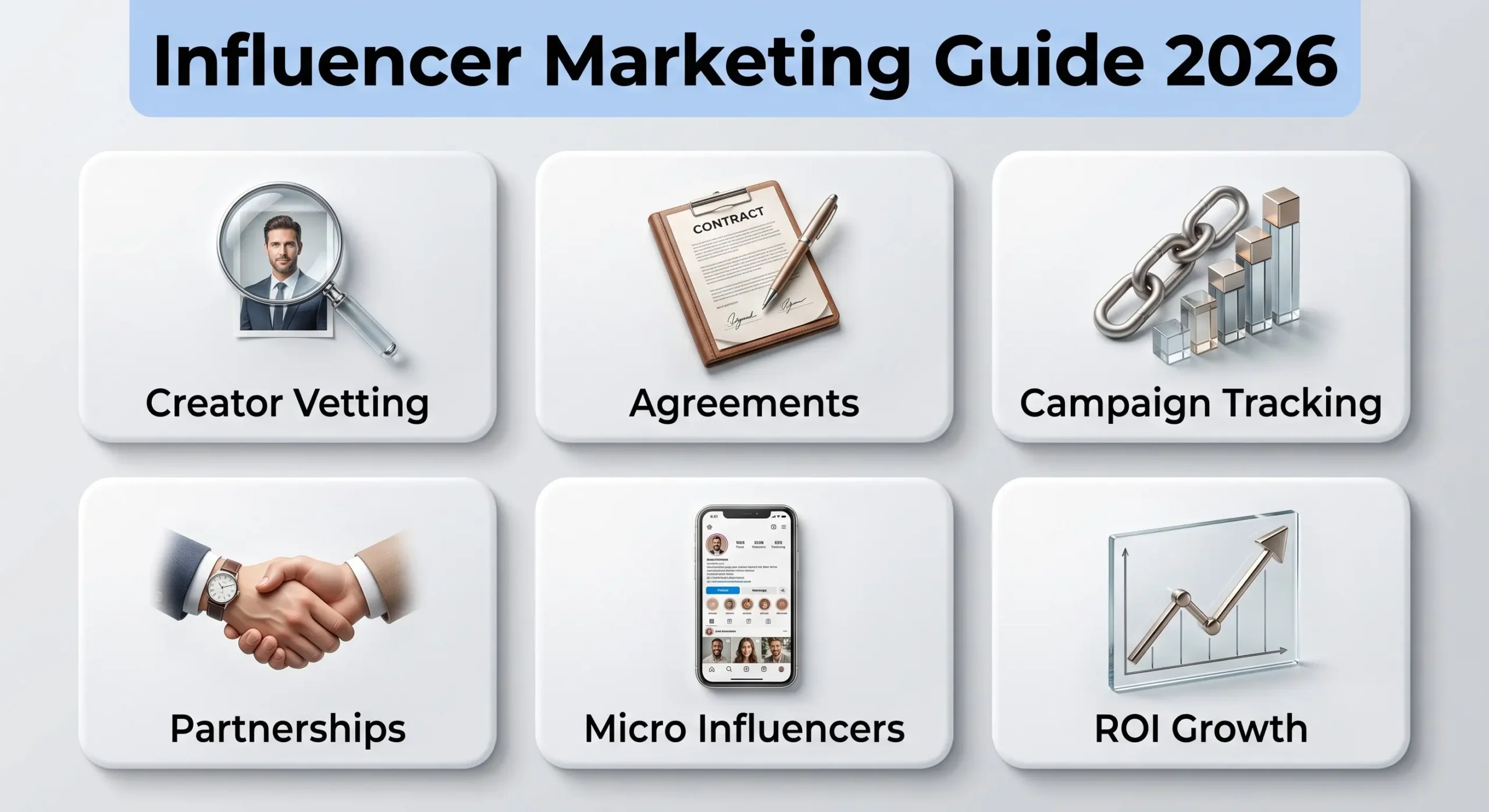
Why Influencer Marketing Still Works for Small Businesses
Audiences trust a recommendation from someone they already follow far more than a traditional ad, and micro and nano influencers often deliver higher engagement rates than celebrities with millions of followers.
For small businesses specifically, this means real results are achievable without celebrity-level budgets, provided the right creators and the right approach are chosen.
1. Choosing Between Nano, Micro, and Macro Influencers
Bigger doesn’t automatically mean better. Follower count alone tells you almost nothing about whether an influencer’s audience actually matches your customer.
What to do: Start with nano (1K-10K) or micro (10K-100K) influencers for tighter, more engaged niche audiences, save macro influencers for broader brand awareness pushes once you have proof of what converts, and prioritize engagement rate over raw follower count when comparing creators.
2. Vetting an Influencer Before Reaching Out
A creator with a large but fake or bot-heavy following will waste your budget entirely, and this is one of the most common ways small businesses lose money on influencer campaigns.
What to do: Check comments for genuine conversation rather than generic emoji spam, review past sponsored posts to see how their audience reacted, and confirm their content style and values actually align with your brand before any contact.
3. Structuring the Deal: Paid, Gifted, or Affiliate
Not every collaboration needs to be a flat paid fee. The right structure depends on the influencer’s size, your budget, and what you’re trying to achieve.
What to do: Use gifted products for nano influencers genuinely interested in your niche, offer a flat fee plus product for micro influencers with proven engagement, and set up affiliate or commission-based deals when you want ongoing promotion tied directly to sales.
4. Written Agreements and Disclosure Requirements
A verbal agreement over DMs leaves both sides exposed if deliverables or timing fall apart, and undisclosed sponsored content creates legal risk for your business as well as the creator.
What to do: Put deliverables, deadlines, and usage rights in a simple written agreement even for smaller collaborations, require clear disclosure like #ad or #sponsored on every post, and confirm who owns the content afterward if you want to reuse it in your own ads.
5. Briefing Creators Without Killing Their Authenticity
Over-scripted content performs worse because audiences can tell when it stops sounding like the creator’s own voice, which defeats the entire point of using influencer marketing.
What to do: Share key talking points and must-include information rather than a word-for-word script, give creative freedom over format and delivery, and provide product details and brand context upfront so they don’t have to guess.
6. Tracking Results Beyond Likes and Comments
Vanity metrics look good in a screenshot but don’t tell you whether the campaign actually drove business, which is the number that matters when deciding whether to work with someone again.
What to do: Use unique discount codes or trackable links per influencer, monitor referral traffic and conversions in Google Analytics 4, and compare cost per acquisition from influencer campaigns against your other channels like Meta ads.
7. Building Long-Term Creator Relationships
A single one-off post rarely moves the needle. Repeated mentions from the same creator over time build far more trust with their audience than a single sponsored post ever will.
What to do: Prioritize ongoing partnerships with creators who perform well over constantly chasing new names, involve top-performing influencers in product launches or feedback early, and treat the best ones more like brand ambassadors than one-time vendors.
Influencer Marketing Checklist
Here’s the complete influencer marketing checklist for 2026, everything covered in this guide in one place:
- Prioritize engagement rate over raw follower count
- Vet audiences for genuine engagement, not bot activity
- Match the deal structure (paid, gifted, affiliate) to the influencer
- Get deliverables and disclosure in writing every time
- Brief on talking points, not word-for-word scripts
- Track with unique codes or links, not just likes
- Build repeat partnerships with your best-performing creators
Also read: Social Media Marketing Strategy 2026
Also read: Content Marketing Strategy for Small Businesses 2026
The Bottom Line
Influencer marketing for 2026 works best as a tracked, structured channel, right-sized creators, clear agreements, and real performance data, not a random product mailout hoping for a mention.
Start small with two or three nano or micro influencers, track results with unique codes, and double down on whoever actually drives sales rather than just likes.
Need help finding the right creators? AmanTPoint helps small businesses run influencer campaigns that are tracked, structured, and built to actually convert.


