
Running SEO for a product page is not the same game as running it for a blog post, and treating them identically is exactly why most online stores underperform in search. A proper e-commerce SEO strategy for 2026 focuses on product pages, category structure, and shopping-specific signals that a regular blog SEO checklist doesn’t cover.
If you’ve read our technical SEO checklist or our conversion rate optimization guide, this builds directly on both, since a product page needs to rank and convert at the same time.
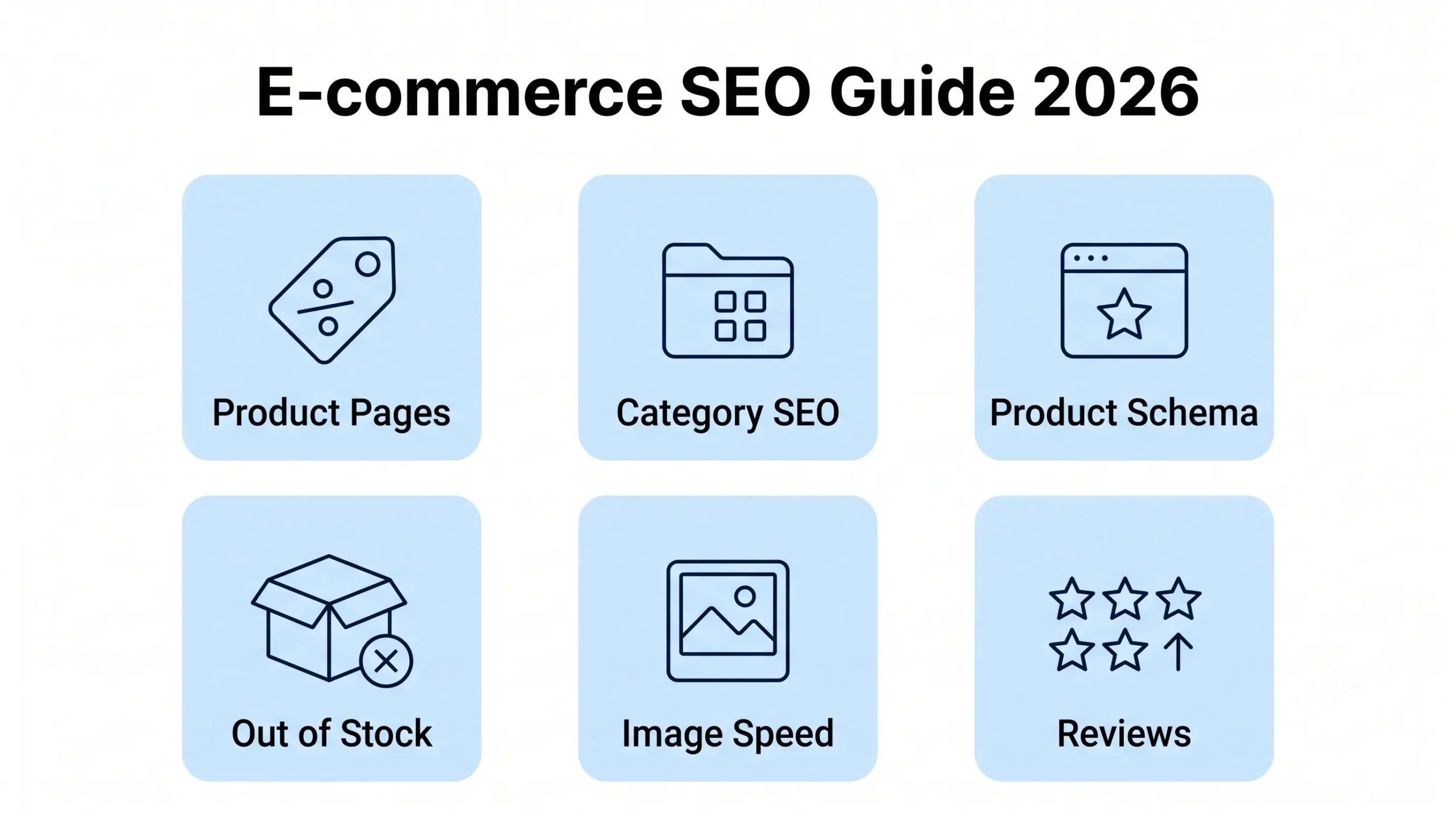
Why E-commerce SEO Needs Its Own Playbook
Product pages compete against marketplaces like Amazon, thin content penalties hit duplicate product descriptions hard, and category pages need to rank for broad terms while individual products rank for specific ones.
None of this is covered by a generic “write good content” SEO guide, which is why stores that copy blog SEO advice onto product pages often see disappointing results.
1. Product Page SEO: Beyond the Manufacturer Description
Pasting the manufacturer’s product description straight onto your page creates duplicate content that competes against dozens of other stores selling the exact same item.
What to do: Write unique product descriptions that answer real buyer questions, include the product’s primary keyword naturally in the title and first paragraph, and add specific details (materials, dimensions, use cases) that generic manufacturer copy skips.
2. Category Page Structure and Internal Linking
Category pages are often the highest-traffic pages on an online store, but they’re also the most neglected, frequently left as a bare product grid with zero unique content.
What to do: Add a short, genuinely useful description above or below the product grid targeting the broad category keyword, keep your category structure no more than three clicks deep from the homepage, and link related categories and top products to each other.
3. Product Schema and Rich Results
The star ratings, price, and stock status you see under some search results come from structured data, and stores using it correctly stand out visually against plain blue links.
What to do: Implement Product schema with price, availability, and review data, keep the schema data matching what’s actually shown on the page, and use Review or AggregateRating schema only when you have genuine customer reviews to back it. According to Accurate Product Markup, it is required to remain eligible for rich results.
4. Handling Out-of-Stock and Discontinued Products
Deleting a product page the moment it’s out of stock throws away whatever rankings and backlinks it had built up, and often creates a jarring dead-end for shoppers who found it through search.
What to do: Keep temporarily out-of-stock pages live with a clear notice and similar product suggestions, use a 301 redirect to the closest matching product only for permanently discontinued items, and avoid soft-404s where the page loads but shows nothing useful.
5. Site Speed for Image-Heavy Stores
E-commerce sites are naturally image-heavy, and unoptimized product photos are one of the most common reasons store pages load slowly, directly hurting both rankings and conversions.
What to do: Compress and serve images in modern formats like WebP, lazy-load product images below the fold, and use a content delivery network if your store serves customers across multiple regions.
6. Managing Duplicate Content from Filters and Variants
Size and color filters, sorting options, and product variants can generate thousands of near-identical URLs, which confuses search engines about which version to rank.
What to do: Set canonical tags pointing filtered and sorted URLs back to the main category page, avoid indexing every color and size variant as a separate URL unless each genuinely has unique demand, and check Google Search Console periodically for duplicate content warnings.
7. Reviews and User-Generated Content
Genuine customer reviews add unique, constantly refreshing content to product pages, something manufacturer descriptions and static copy can never provide on their own.
What to do: Send a review request email a few days after delivery, display reviews directly on the product page rather than hiding them in a separate tab, and respond to negative reviews professionally instead of removing them.
E-commerce SEO Checklist
Here’s the complete e-commerce SEO checklist for 2026, everything covered in this guide in one place:
- Write unique product descriptions, never copy manufacturer text
- Add genuine content to category pages, not just a product grid
- Implement accurate Product and Review schema
- Keep out-of-stock pages live instead of deleting them
- Compress and lazy-load product images
- Canonicalize filtered and variant URLs to avoid duplicate content
- Actively collect and display genuine customer reviews
Also read: Technical SEO Checklist for 2026
Also read: Conversion Rate Optimization Guide 2026
The Bottom Line
E-commerce SEO for 2026 comes down to treating product and category pages as their own content type, unique descriptions, clean structure, accurate schema, and real reviews, rather than applying generic blog SEO advice to a shopping experience.
Start with your highest-traffic category pages and best-selling products first, fix duplicate content and thin descriptions there, then work outward to the rest of the catalog.
Need help optimizing your store? AmanTPoint helps small e-commerce businesses fix technical SEO issues and product page structure that actually move rankings.


