
Backlinks come up in almost every SEO conversation, and for good reason, they’re still one of the strongest trust signals a search engine uses to judge your site. But most advice on the topic either oversimplifies it (“just get more links!”) or veers into shady territory that can get a site penalized. This guide covers how to build backlinks in 2026 using approaches that are slower, but actually hold up.
If you’ve read our on-page vs off-page SEO guide, you already know backlinks fall under the off-page side of things. This picks up right where that left off, with the actual “how.”
Not all backlinks carry equal weight, and this is where a lot of people get tripped up. A single link from a relevant, respected site in your industry is worth more than fifty links from random, low-quality directories.
Relevance matters just as much as authority. A link from a gardening blog probably won’t do much for an accounting website, no matter how well-ranked that gardening blog is.
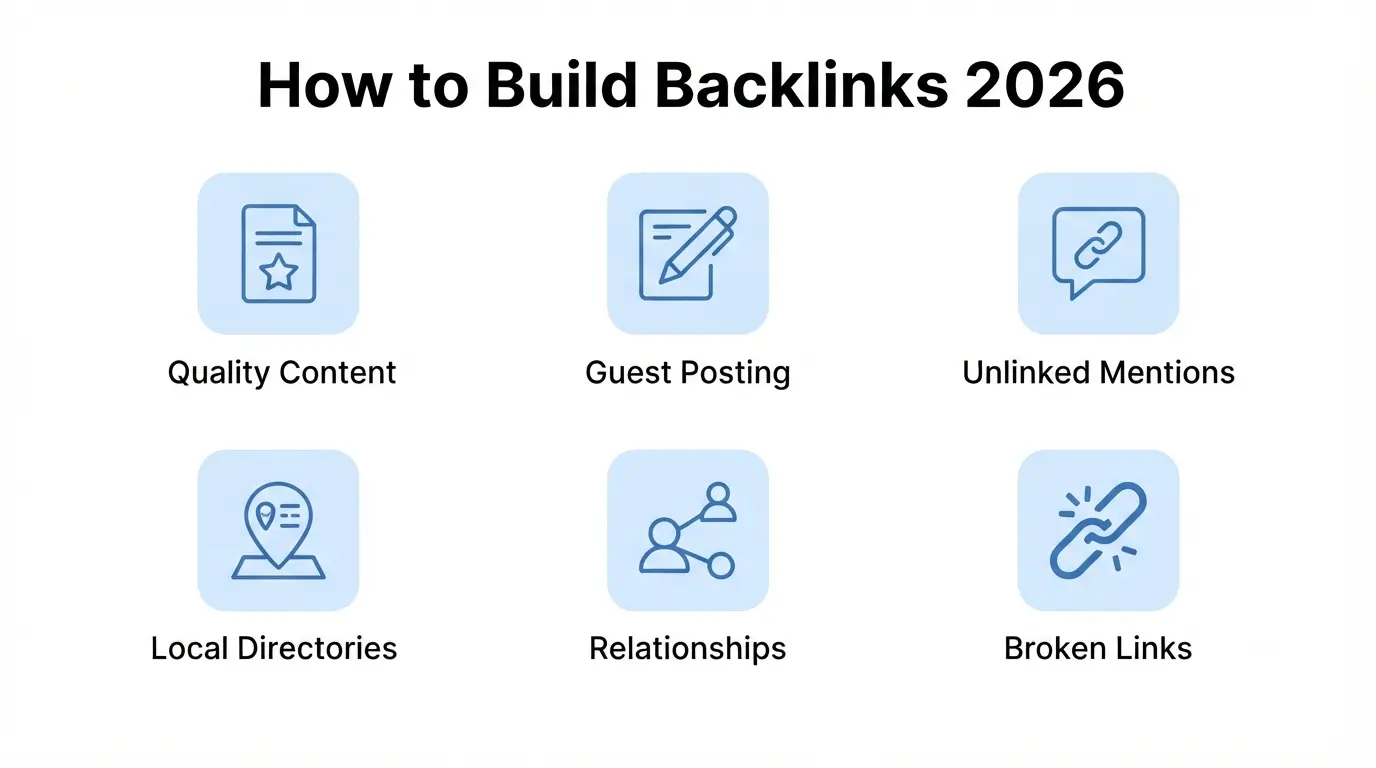
1. Create Content Worth Linking To
Although it may seem apparent, everything else is built upon this. No one links to shallow, generic information; instead, they link to items that are actually helpful, unique, or difficult to obtain elsewhere.
What to do: Write unique research, a comprehensive manual, a free tool, or data that no one else has published. Then, make sure that it is truly easy to locate and refer to.
2. Write Genuine Guest Posts
When done correctly—the important word being “properly”—guest posting is still effective. Mass-produced guest pieces that are overloaded with links are detected by search engines and rejected by editors.
What to do: Submit specific, genuinely helpful article ideas to blogs that are relevant to your sector. Only include a natural link back to your website when it truly benefits the reader—not just to increase the number of links you have.
3. Reclaim Unlinked Mentions
This one gets overlooked constantly. Sometimes people mention your brand or business without actually linking to your site, which means you’re getting the mention but missing the SEO value.
What to do: Search for your brand name using a tool like Google Alerts, and when you find an unlinked mention, reach out politely and ask if they’d be willing to add a link.
4. Get Listed in Relevant Directories
Not all directories are spammy link farms, industry-specific and local directories can genuinely help both your visibility and your backlink profile, especially if you covered this already in our local SEO guide.
What to do: Focus on directories that are actually relevant to your industry or location, and skip the generic, low-quality ones that exist purely to sell backlinks.
5. Build Relationships, Not Just Links
Some of the best backlinks come from genuine relationships, not cold outreach emails. Partnering, collaborating, or simply being visible in your industry’s community naturally leads to links over time.
What to do: Engage genuinely with other creators and businesses in your space, comment thoughtfully, share their work, and collaborate where it makes sense. Links often follow relationships, not the other way around.
6. Fix Broken Links on Other Sites
This is a classic tactic that still works because it genuinely helps the other site too. Broken links hurt everyone, the site owner, their readers, and their own SEO.
What to do: Find broken links on relevant sites in your niche, then reach out and suggest your own content as a replacement, but only if it’s a genuinely good fit, not a forced one.
7. Avoid These Common Backlink Mistakes
A few backlink practices can do more harm than good, and they’re worth knowing before you accidentally fall into them.
What to avoid: Buying links in bulk, joining link exchange schemes, or getting links from irrelevant, low-quality sites just to pad your numbers. Search engines are good at spotting these patterns, and the risk usually isn’t worth it.
How to Build Backlinks: Quick Checklist
- Create genuinely link-worthy content, guides, tools, or original data
- Write targeted guest posts for relevant industry sites
- Search for and reclaim unlinked brand mentions
- Get listed in relevant, high-quality directories
- Build real relationships within your industry
- Suggest your content as a fix for broken links elsewhere
- Avoid bought links and link exchange schemes
Also read: On-Page vs Off-Page SEO: Complete Guide 2026
Also read: How to Do a Complete Website SEO Audit
The Bottom Line
Learning how to build backlinks in 2026 really comes down to one shift in thinking: stop chasing links and start creating things worth linking to. Every tactic on this list works better when the content behind it is genuinely good.
This isn’t a fast process, and anyone promising overnight results is usually cutting corners you’ll pay for later. Pick one or two of these strategies, stay consistent, and the links tend to follow.
Want help building authority the right way? AmanTPoint works with businesses on link building strategies that are actually sustainable, not just quick wins that disappear after the next algorithm update.


