
Traffic without leads is just a number on a dashboard. A real lead generation strategy for 2026 ties together everything else on this site, SEO, ads, content, and email, into one system that actually captures interest and turns it into a conversation with your business.
If you’ve read our conversion rate optimization guide and our email marketing guide, this is the layer that sits between them: how you turn a visitor into a captured lead in the first place, before nurturing takes over.
Why Lead Generation Needs Its Own Strategy
Most small businesses have separate SEO, ads, and email efforts running without a shared plan for what happens the moment someone shows interest. That gap is where warm visitors quietly leave and never come back.
A lead generation strategy connects every channel to a single, clear next step, so no matter where someone finds you, there’s a real path from “just looking” to “captured lead”.
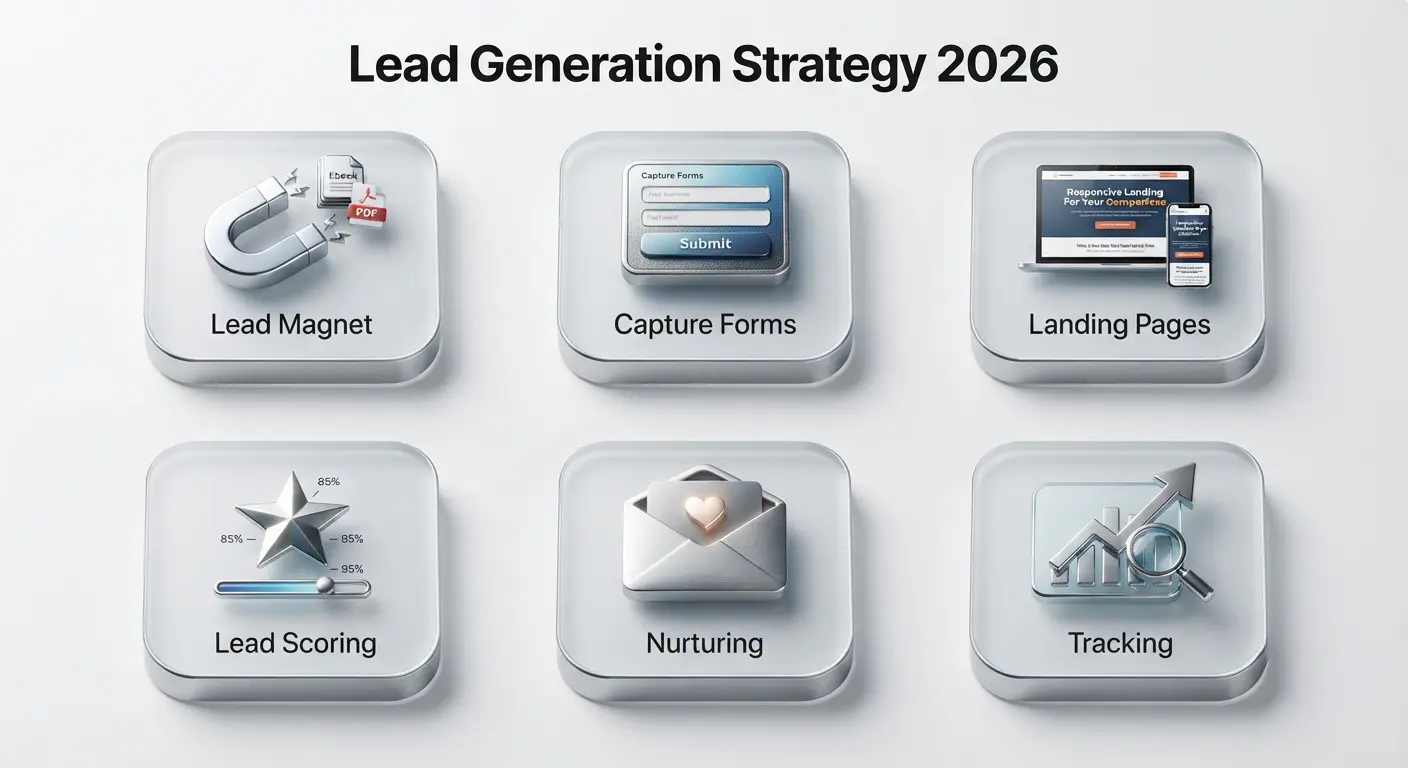
1. Choosing the Right Lead Magnet for Your Business
A generic “subscribe to our newsletter” box converts far worse than an offer that solves a specific, immediate problem for the visitor.
What to do: Offer something genuinely useful and specific (a checklist, a free audit, a discount, a calculator) tied directly to what that page is about, match the lead magnet’s format to your audience (a quick checklist for busy buyers, a detailed guide for research-heavy purchases), and keep the ask (usually just an email) as small as the value being offered.
2. Placing Capture Forms Where Intent Already Exists
A form buried at the bottom of a long page gets a fraction of the conversions of one placed where a visitor is already showing genuine interest.
What to do: Add a form or click-to-call option near the top of high-intent pages like pricing and services, use an exit-intent popup sparingly for visitors about to leave a high-value page, and keep forms short, the more fields you ask for upfront, the fewer people finish.
3. Landing Pages Built for a Single Offer
Sending paid traffic to your homepage, as covered in our Google Ads guide, wastes budget because the homepage tries to serve everyone instead of the one person who clicked that specific ad.
What to do: Build a dedicated landing page per campaign that matches the ad’s exact message, remove site navigation from that page so there’s nowhere else to click, and keep the page focused on one offer with one clear call-to-action.
4. Lead Scoring: Not Every Lead Deserves the Same Follow-Up
Treating a casual newsletter signup the same as someone who requested a quote wastes your sales time on the wrong priorities.
What to do: Separate leads by intent signal (content download versus quote request versus demo booking), follow up with high-intent leads within minutes to hours, not days, and route lower-intent leads into an automated nurture sequence instead of a personal call right away.
5. Nurturing Leads That Aren’t Ready to Buy Yet
Most leads don’t convert on the first interaction, and giving up on them after one email throws away interest you already paid to earn.
What to do: Set up an automated email nurture sequence as outlined in our email marketing guide, share genuinely useful content rather than repeated sales pitches, and re-engage cold leads with a specific, time-bound offer rather than a generic “we miss you” email.
6. Tracking Lead Sources All the Way to Revenue
Without proper tracking, it’s impossible to know whether your best leads are coming from SEO, Google Ads, Meta Ads, or referrals, which means budgets often stay misallocated for far longer than they should.
What to do: Mark form and call conversions as key events in GA4 as covered in our GA4 setup guide, tag every campaign with UTM parameters so source data stays accurate, and review cost per lead by channel monthly, not just total lead count.
Lead Generation Strategy Checklist
Here’s the complete lead generation checklist for 2026, everything covered in this guide in one place:
- Offer a specific lead magnet, not a generic newsletter signup.
- Place capture forms where intent already exists.
- Send paid traffic to a dedicated, single-offer landing page.
- Scores lead by intent, not just by whether they filled a form.
- Follow up with high-intent leads within minutes, not days.
- Nurture cold leads with useful content, not repeated pitches.
- Track every lead source through to revenue in GA4
Also read: Conversion Rate Optimization Guide 2026
Also read: Email Marketing Strategy 2026.
The Bottom Line
A lead generation strategy for 2026 is the connective tissue between traffic and revenue, the right offer, in the right place, followed up at the right speed, tracked back to the channel that earned it.
Start by auditing your highest-traffic pages for a clear next step, fix the ones with no real offer first, then layer in lead scoring and better tracking as volume grows.
Need help building this out? AmanTPoint helps small businesses build lead generation systems that connect SEO, ads, and email into one tracked funnel.
Frequently Asked Questions About Lead Generation
What’s the difference between a lead and a conversion?
A lead is someone who has shown interest by sharing contact information, like filling a form or requesting a quote. A conversion is the final desired action, such as a purchase, which may happen well after the lead was first captured.
How quickly should I follow up with a new lead?
For high-intent leads like quote requests or demo bookings, within minutes to a few hours is ideal, since response speed strongly affects whether they still remember requesting contact. Lower-intent leads, like a content download, can go into an automated nurture sequence instead.
Do I need separate landing pages for every ad campaign?
Ideally yes, for any paid campaign with a real budget behind it. A landing page matching the ad’s exact offer and message converts noticeably better than sending that traffic to a general homepage or services page.
How do I know which marketing channel is actually generating the best leads?
Set up conversion tracking in GA4 with UTM-tagged campaigns for every channel, then compare cost per lead and, where possible, lead-to-sale rate by source rather than just raw lead volume.


