
Email open rates hover around 20 to 30 per cent on a good day. WhatsApp marketing messages routinely get opened within minutes, which is exactly why it’s become one of the highest-engagement channels available to small businesses, especially across India and other WhatsApp-heavy markets.
If you’ve read our email marketing guide or our lead generation strategy guide, think of WhatsApp as the direct, real-time channel that sits alongside both, built for quick questions, order updates, and fast follow-ups.
Why WhatsApp Marketing Works So Well
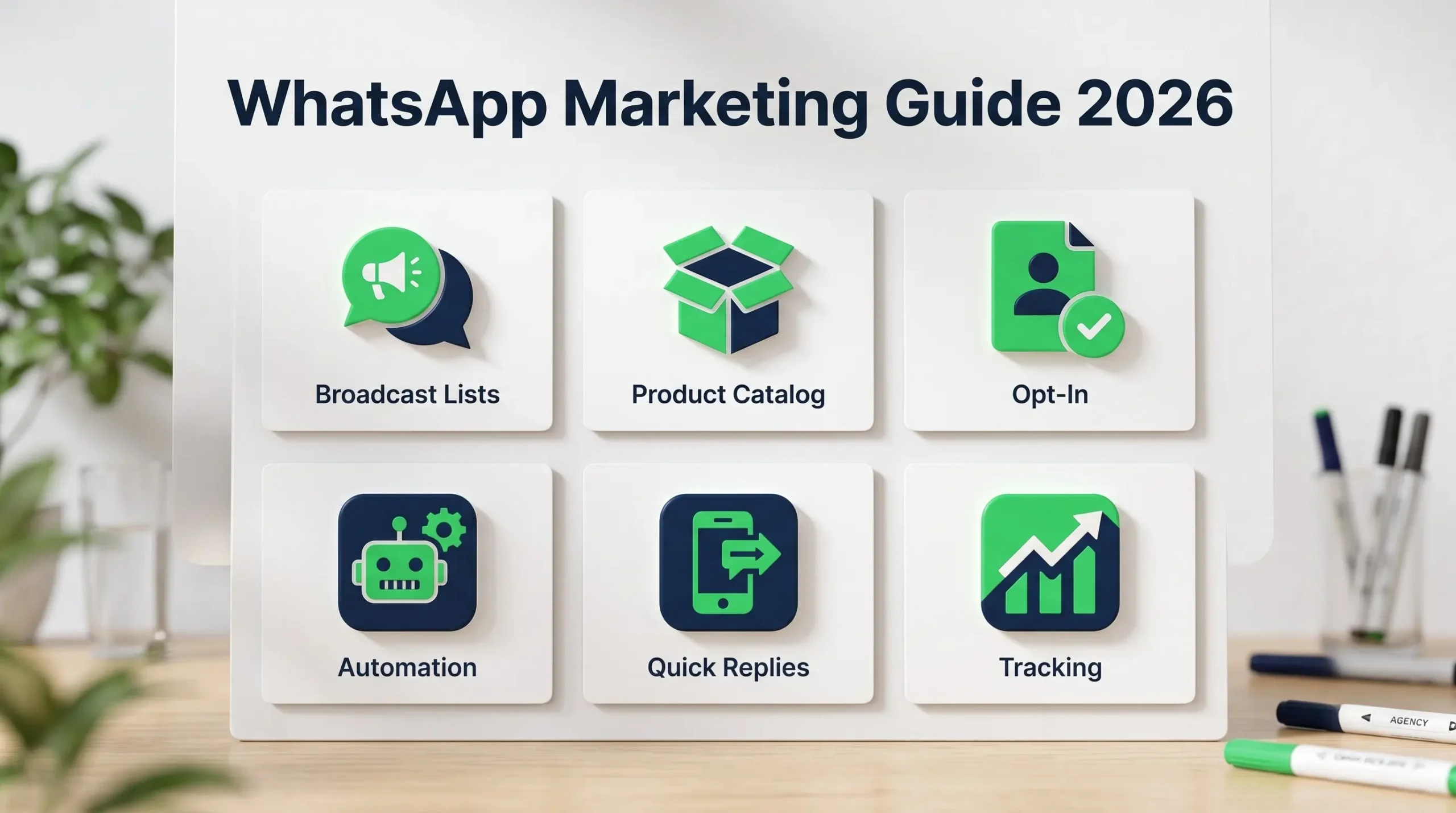
WhatsApp is where customers already spend time talking to friends and family, which makes a business message feel more immediate and personal than an email sitting in a crowded inbox.
For small businesses, this means faster responses to customer questions, higher engagement on order updates, and a direct line for follow-ups that doesn’t rely on an algorithm deciding who sees it.
1. WhatsApp Business App vs WhatsApp Business API
Most small businesses start with the free WhatsApp Business app, but it has real limits once volume grows, and knowing when to move to the API matters for planning ahead.
What to do: Use the free WhatsApp Business app for low-volume, mostly manual conversations with a catalogue and quick replies; move to the WhatsApp Business API once you need automation, multiple team members replying, or integration with a CRM; and expect the API to involve a paid provider (like a Business Solution Provider) rather than being free.
2. Building an Opt-In List the Right Way
WhatsApp requires explicit opt-in before you can message someone for marketing purposes, and ignoring that rule gets numbers banned quickly, not just flagged.
What to do: Add a WhatsApp opt-in checkbox or click-to-chat button at checkout and on contact forms, never import or message a contact list that didn’t explicitly consent to WhatsApp messages, and make opting out as easy as replying “STOP”, since this is both good practice and a platform requirement.
3. Using Catalogues and Quick Replies Effectively
The WhatsApp Business app includes a built-in product catalogue and saved quick replies, features many small businesses never turn on despite them being free.
What to do: Set up your product or service catalogue directly inside WhatsApp so customers can browse without leaving the chat, create quick reply templates for your most common questions (hours, pricing, and availability), and keep your business profile complete with hours, address, and website.
4. Broadcast Lists and Template Messages
Mass messaging on WhatsApp works differently from email; broadcasts only reach contacts who have you saved, and outside a 24-hour reply window, businesses must use pre-approved template messages.
What to do: Ask customers to save your business number so broadcast lists actually reach them, get promotional template messages approved in advance through Meta if using the Business API, and keep broadcast frequency low. WhatsApp is a higher-trust channel than email, and overusing it burns that trust faster.
5. Automating Without Losing the Personal Feel
Chatbots can handle repetitive questions at scale, but a fully automated experience undercuts the exact reason WhatsApp outperforms other channels: it feels like talking to a real person.
What to do: Automate simple, repetitive queries like order status and store hours, make it easy and obvious how to reach a real person for anything more complex, and avoid chaining long automated flows that feel like navigating an IVR phone menu.
6. Tracking WhatsApp as a Real Marketing Channel
WhatsApp conversations often get treated as pure customer support and never show up in marketing reporting, even when they’re clearly driving sales.
What to do: Use a unique click-to-chat link from ads or your website so WhatsApp traffic shows up separately in GA4, as covered in our GA4 setup guide; ask customers how they found you when it’s unclear; and track orders or leads that originated from WhatsApp conversations, not just impressions or clicks.
WhatsApp Marketing Checklist
Here’s the complete WhatsApp marketing checklist for 2026, everything covered in this guide in one place:
Start with the free business app, and move to the API once volume grows.
Get explicit opt-in before sending any marketing messages.
Set up your product catalogue and common quick replies.
Encourage customers to save your number for broadcasts.
Automate simple queries; keep a clear path to a real person.
Track WhatsApp-driven leads and sales separately in GA4.
Also read: Email Marketing Strategy 2026.
Also read: Lead Generation Strategy 2026.
The Bottom Line
WhatsApp marketing for 2026 works best as a high-trust, high-response channel for the right moments, order updates, quick questions, and follow-ups, not as a replacement for email at scale.
Start with the free Business app, set up your catalogue and quick replies properly, and build your opt-in list honestly before thinking about broadcasts or the paid API.
Want to set this up properly? AmanTPoint helps small businesses set up WhatsApp Business and connect it to their actual lead and sales tracking.
Frequently Asked Questions About WhatsApp Marketing
Is WhatsApp Business free to use?
The WhatsApp Business app is free and covers most small business needs, including a catalogue and quick replies. The WhatsApp Business API, needed for automation and team inboxes, typically involves a paid provider and messaging costs.
Can I message customers who haven’t contacted me first?
Only with their explicit prior opt-in, and even then, messages outside the 24-hour reply window generally require a pre-approved template message if you’re using the Business API. Messaging without consent risks your number being banned.
How is WhatsApp marketing different from SMS marketing?
WhatsApp supports rich media (images, catalogues, and documents), two-way conversation, and read receipts, while SMS is plain text only. WhatsApp generally sees higher engagement, but it also comes with stricter opt-in and template approval rules.
How often should I send broadcast messages?
Less often than email, a few times a month at most for most small businesses. WhatsApp is a higher-trust, more personal channel, and overusing it for promotions tends to drive opt-outs faster than other channels.


