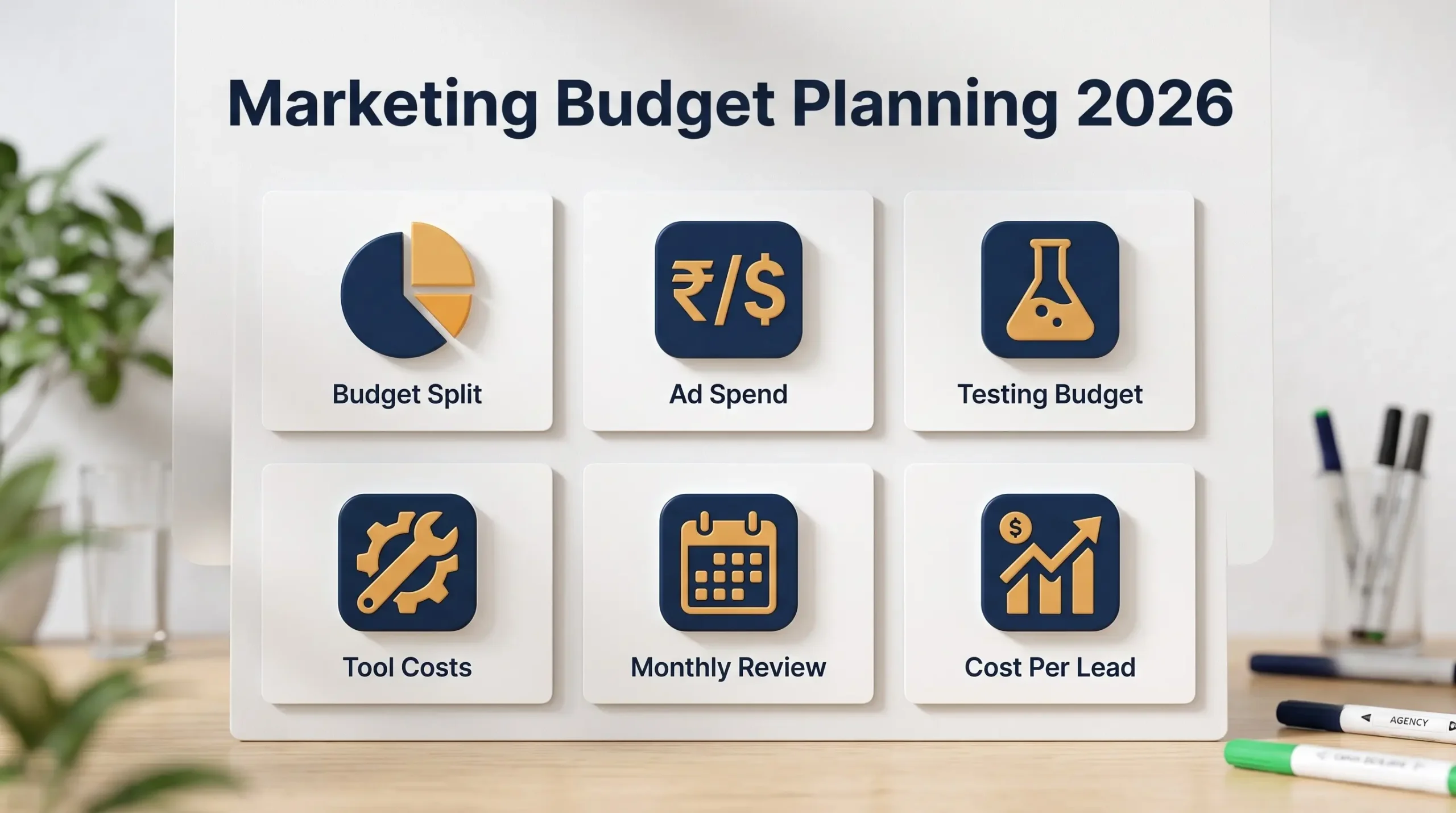
Spreading a small budget evenly across every channel feels fair, but it usually means not enough gets spent to actually work. A real marketing budget for 2026 starts with what your business can afford to lose while testing, then concentrates spend on whatever channel is proven to bring back the most. If you’ve read our Google Ads guide, our Meta Ads guide, or our GA4 setup guide, this is where all of that comes together, deciding how much to actually spend and where.
Why a Written Marketing Budget Matters
Without a written budget, marketing spend tends to drift toward whatever feels urgent that week, a boosted post here, or a quick ad there, rather than following a plan tied to actual results. A written budget forces the harder, more useful questions upfront: what’s the goal, what can we afford to test, and how will we know if it worked?
1. How Much Should a Small Business Spend on Marketing?
There’s no single correct number, but industry benchmarks give a useful starting range rather than guessing from scratch. What to do: Use roughly 7 to 12 per cent of revenue as a general small business benchmark, lean toward the higher end if you’re actively trying to grow or enter a new market, and treat this as a starting point to adjust once you have real performance data, not a fixed rule.
2. Splitting Budget Between Organic and Paid Channels
Organic channels like SEO and content compound over time but take months to show results, while paid channels like Google and Meta Ads deliver faster, but stop the moment you spend. What to do: Keep a consistent baseline investment in SEO and content even when paid campaigns are running, since stopping content entirely just to fund ads often costs more long-term; use paid ads for immediate, trackable demand, and treat organic growth as the foundation that reduces your paid costs over time.
3. Allocating Budget Across Google Ads, Meta Ads, and Content
Without actual performance data, budget allocation is just a guess, which is exactly the gap a small, structured test is meant to close. What to do: Split a new budget roughly evenly across two or three channels for the first one to two months, track cost per lead by channel as covered in our lead generation strategy guide, and shift more budget toward whichever channel delivers the lowest cost per qualified lead after that initial test period.
4. Setting Aside Budget for Testing and Experiments
Spending every rupee on proven channels feels safe, but it also means you’ll never discover a new channel that could outperform what you’re already doing. What to do: Set aside 10 to 15 per cent of the total budget specifically for testing new channels or creative approaches, give any new test enough budget and time to actually reach a meaningful sample size before judging it, and be willing to kill a test quickly once it’s clearly underperforming rather than hoping it improves.
5. Accounting for Tools and Hidden Costs
Ad spend is the most visible line item, but email platforms, SEO plugins, design tools, and agency or freelancer fees quietly eat into the same budget if they’re not planned for upfront. What to do: List every recurring marketing tool and subscription separately from ad spend, review tool subscriptions quarterly to drop ones you’re not actually using, and build in a small contingency, roughly 5 to 10 per cent, for unplanned costs or opportunities that come up mid-period.
6. Reviewing and Reallocating Budget Monthly
A budget set once at the start of the year and never revisited stops reflecting reality within a few months, especially for a small business where conditions change quickly. What to do: Review cost per lead and return on ad spend by channel every month using the tracking setup in GA4, reallocate budget toward what’s working rather than waiting for a full quarter to pass, and document why each major reallocation was made so future decisions aren’t made from memory alone.
Marketing Budget Planning Checklist
Here’s the complete marketing budget planning checklist for 2026, everything covered in this guide in one place:
Start around 7 to 12 per cent of revenue as a baseline.
Keep a consistent organic/content investment alongside paid ads.
Split new budget across channels, then follow the cost-per-lead data.
Set aside 10 to 15 per cent specifically for testing new ideas.
Track tool subscriptions separately and review them quarterly.
Review and reallocate budget monthly, not just once a year.
Marketing budget planning for 2026 isn’t about finding one perfect number; it’s about starting with a reasonable baseline, tracking cost per lead honestly, and reallocating toward what’s actually working every month. Start with a simple split across two or three channels, track results properly in GA4, and let the data decide where more budget goes from there. Need help planning yours? AmanTPoint helps small businesses build a marketing budget that’s based on real cost-per-lead data, not guesswork.
Frequently Asked Questions About Marketing Budget Planning
What percentage of revenue should a small business spend on marketing?
A common starting benchmark is 7 to 12 per cent of revenue, leaning higher if the business is actively trying to grow or enter a new market and lower if it’s primarily focused on retaining existing customers.
Should I spend more on SEO or paid ads first?
If you need leads quickly, paid ads deliver faster results. If you’re building for the long term and can wait a few months, SEO and content compound over time and reduce dependence on ad spend later. Most small businesses benefit from running both together.
How often should a marketing budget be reviewed?
Monthly is ideal for a small business, since channel performance can shift faster than a quarterly review would catch. A monthly review also makes it easier to shift budget toward what’s working before too much is spent on what isn’t.
What’s a reasonable amount to set aside for testing new marketing ideas?
Around 10 to 15 per cent of the total marketing budget is a reasonable range for testing new channels or creative approaches, enough to get a meaningful read on performance without risking the budget for proven, reliable channels.